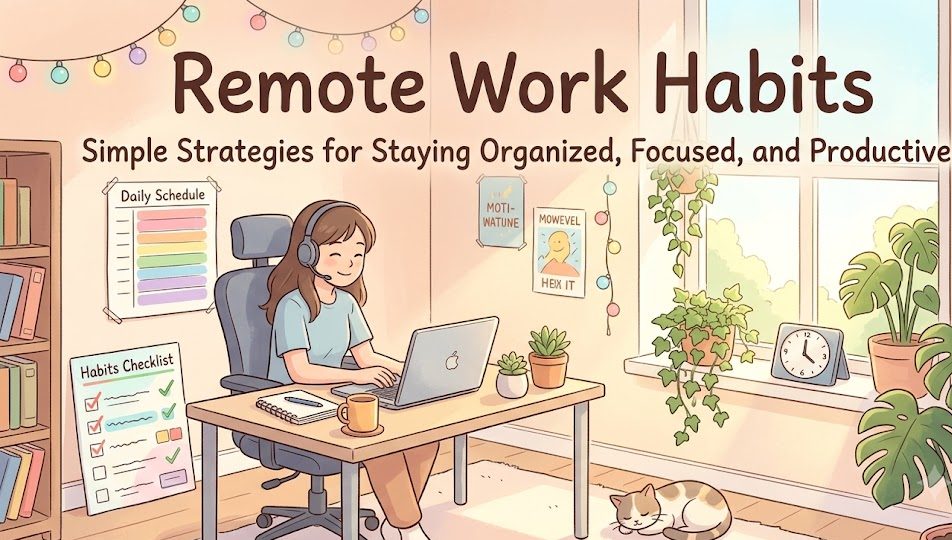
Build Better Remote Work Habits.
Simple strategies for creating structure, protecting your focus, organizing daily tasks, communicating clearly, and staying productive while working from home or anywhere else.
Remote work needs structure, not constant pressure.
Working remotely gives you flexibility, but without a clear routine it can become difficult to separate work from personal time. Strong habits create boundaries that help you start work with purpose, stay focused, communicate effectively, and finish the day without carrying unfinished tasks into your evening.
Start With a Consistent Work Routine
Give your day a predictable beginning.
One of the easiest ways to improve remote work is to create a repeatable routine. Without a commute or office opening time, it can be tempting to begin working randomly throughout the day.
A consistent start time gives your brain a clear signal that the workday has begun. Your routine does not need to be complicated. It can simply involve getting ready, preparing your workspace, reviewing priorities, and starting the first important task.
Set a Start Time
Begin work around a consistent time whenever your schedule allows.
Create a Morning Cue
Use a simple routine that signals the beginning of focused work.
Review Priorities
Know what matters most before opening a long list of small tasks.
Plan Your Day Before You Start
A few minutes of planning can prevent hours of confusion.
Remote workers often have many small tasks competing for attention. Planning the day before getting deeply involved in work can make the schedule easier to control.
Prepare
Set up your workspace and remove obvious distractions.
Prioritize
Select the most important tasks for the day.
Focus
Start with meaningful work before getting lost in messages.
Reset
Take a proper break before beginning the next work block.
Protect Your Focus
Attention is one of your most valuable work resources.
Constant notifications, social media, unnecessary browsing, and frequent task switching can make focused work difficult. Instead of trying to eliminate every distraction, create periods where distractions are intentionally reduced.
Focus Rules
Use simple rules during important work sessions instead of relying completely on willpower.
Distraction Check
Create a Dedicated Workspace
Your environment can influence your work habits.
A dedicated workspace makes it easier to separate work from personal activities. It does not have to be a complete home office. Even a small desk or consistent corner can become a useful work zone.
Comfort & Setup
Make the physical workspace comfortable enough to support longer periods of focused work.
Visual Organization
A cluttered desk can make it harder to maintain a clear working environment.
Use a Simple Task Management System
Do not keep your entire workload inside your head.
A task list can reduce mental clutter and make priorities easier to see. The system can be as simple as a notebook, spreadsheet, or digital task manager.
Today
Keep only the tasks that genuinely need attention during the current workday.
Upcoming
Store future work here so it does not distract you from today’s priorities.
Completed
Move finished work out of the active list and keep a record of progress when useful.
Learn to Prioritize Tasks
Busy does not always mean productive.
A long task list can make everything appear equally important. Instead, separate work according to urgency, importance, and the consequences of delaying it.
Take Real Breaks
Breaks are part of productive work, not the opposite of it.
Continuous screen time can make work feel exhausting. Short breaks can provide an opportunity to stand up, move around, get water, step away from the screen, or simply reset your attention.
Communicate Clearly
Good remote communication reduces unnecessary back-and-forth.
Remote teams rely heavily on written communication. A message should provide enough context for the other person to understand what you need without having to ask several follow-up questions.
Control Notifications
Not every notification deserves immediate attention.
Notifications can break concentration even when you do not respond to them. Review which alerts are genuinely important and reduce the rest.
Quiet Focus Periods
Turn off unnecessary notifications during demanding work.
Message Windows
Check routine messages during planned periods.
Keep Essentials
Allow genuinely important alerts to remain visible.
Separate Work From Personal Time
Boundaries help protect both productivity and recovery.
One of the challenges of remote work is that the workplace and personal space may exist in the same location. Without a clear stopping point, people can continue checking work long after their planned workday ends.
Use a Closing Ritual
End the workday with a short routine that signals work is finished.
Set a Finish Time
Whenever possible, establish a realistic end to the workday.
Close Work Apps
Reduce the temptation to continue checking unfinished work.
Create an End-of-Day Reset
Finish today’s work and make tomorrow easier.
A short end-of-day review can prevent unfinished tasks from constantly occupying your thoughts. Spend a few minutes checking progress, updating tasks, and preparing the next day’s priorities.
5-Minute Reset
Before closing your laptop, quickly review what happened today and decide what needs attention next.
Common Remote Work Mistakes
Recognizing bad habits is the first step toward replacing them.
Build Habits That Are Easy to Maintain
Consistency is more useful than a perfect routine.
A productivity system should fit your real working style. If a routine is too complicated, it may be difficult to maintain. Start with a few habits that provide the greatest benefit and gradually add others.
Start Small
Begin with one or two habits rather than changing everything at once.
Repeat
Use the same basic structure often enough for it to become natural.
Adjust
Change the system when your workload or schedule changes.
Work From Anywhere With More Structure
Productive remote work does not require a complicated system. A consistent routine, organized workspace, realistic task list, focused work sessions, useful breaks, clear communication, and a proper end-of-day reset can create a much stronger working rhythm.