Keep Discussions on Track
One of the biggest reasons virtual meetings become longer than expected is that conversations drift away from the original purpose. While side discussions may seem valuable, they often consume time without helping the entire group. A meeting facilitator should politely redirect the conversation whenever it moves away from the agenda. If a topic requires additional discussion, place it in a “parking lot” list and schedule a separate conversation later.
Staying focused doesn’t mean cutting people off—it means respecting everyone’s time. Every participant should have the opportunity to contribute while ensuring the meeting continues moving toward its intended outcome.
Common Time Wasters
- Repeating information already shared.
- Discussing unrelated topics.
- Waiting for unprepared participants.
- Reviewing documents during the meeting.
- Inviting unnecessary attendees.
- Leaving decisions unresolved.
Encourage Equal Participation
Some participants naturally speak more than others, while quieter team members may hesitate to share valuable ideas. Meeting leaders should actively invite input from everyone by asking direct questions and creating space for different perspectives. This improves decision-making while helping every participant feel included.
If the meeting includes a large group, use round-table updates or structured discussion formats to prevent only a few voices from dominating the conversation.
Use Visuals Only When Helpful
Slides, dashboards, and shared documents can improve understanding, but they should support the discussion rather than replace it. Avoid overcrowded presentations with excessive text. Simple visuals highlighting key information make meetings easier to follow and reduce unnecessary explanations.
Whenever possible, share documents before the meeting so participants can review them in advance. This allows meeting time to focus on decisions instead of reading information together.
Pro Tip
If attendees spend the first ten minutes reading your slides, send the document beforehand and use the meeting for discussion instead.
End Every Meeting with a Summary
Before ending the call, summarize the most important decisions, assigned responsibilities, deadlines, and next steps. This final recap ensures everyone leaves with the same understanding and reduces follow-up questions later. Assign someone to capture meeting notes and distribute them shortly after the session ends so absent team members remain informed.
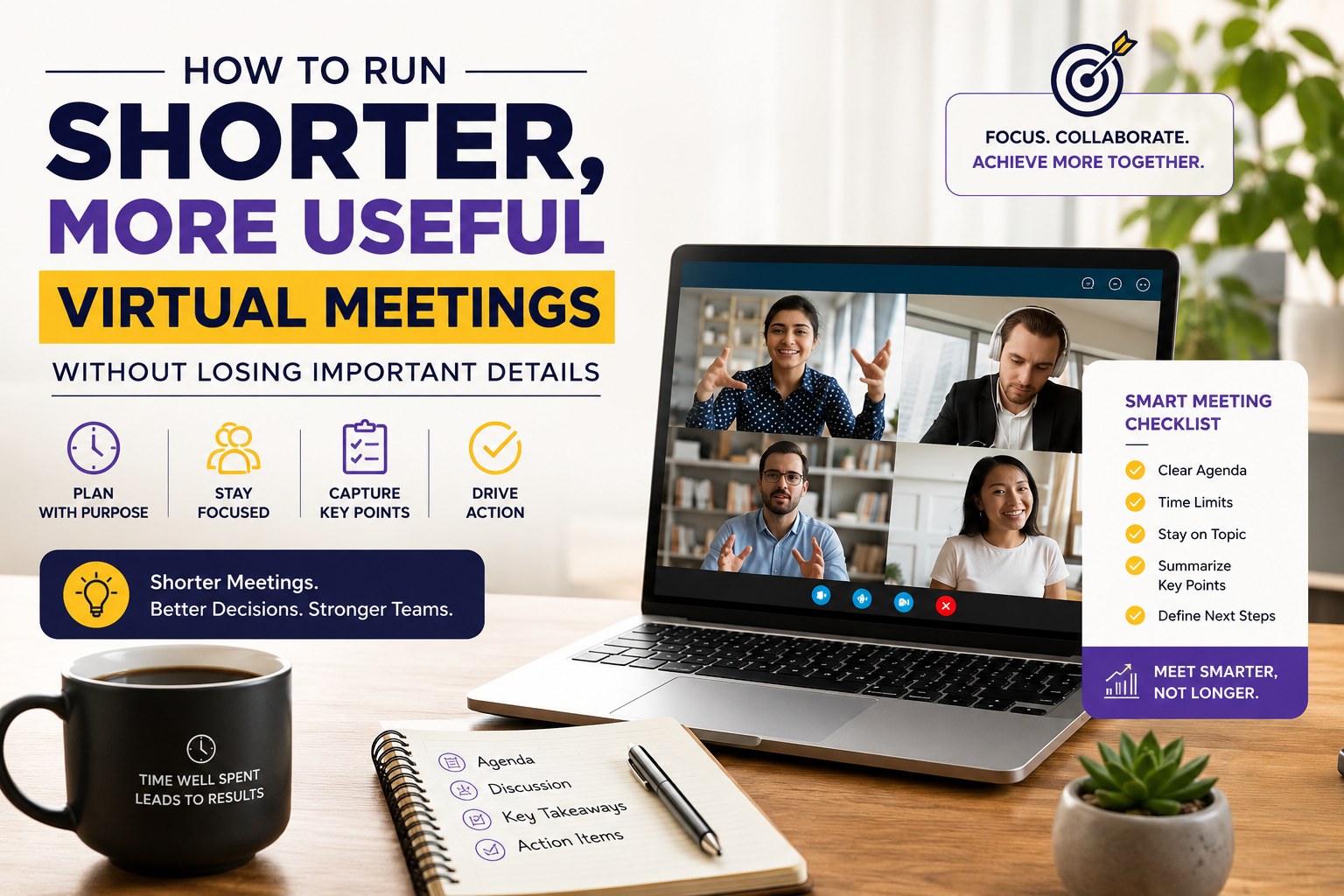
Effective Meeting Checklist
- ✔ Clear objective defined.
- ✔ Agenda shared beforehand.
- ✔ Only essential participants invited.
- ✔ Discussion stayed on topic.
- ✔ Every decision documented.
- ✔ Action items assigned.
- ✔ Deadlines confirmed.
- ✔ Meeting summary shared afterward.
Continuously Improve Meeting Habits
Even well-organized meetings can become more effective over time. Ask participants for feedback regularly about what is working and what could improve. Track average meeting length, attendance, and outcomes to identify patterns. If meetings consistently run overtime or end without clear decisions, adjust the structure until they become more efficient.
Small improvements made consistently lead to significant productivity gains across the entire organization. Teams that respect each other’s time build stronger collaboration, reduce unnecessary interruptions, and create more opportunities for focused work.
Conclusion
Shorter virtual meetings are not about rushing through conversations—they are about making every discussion meaningful. When meetings begin with a clear purpose, follow a structured agenda, involve the right participants, stay focused on decisions, and finish with actionable next steps, teams accomplish more in less time.
Organizations that develop strong meeting habits reduce fatigue, improve communication, and create a culture where collaboration feels efficient instead of exhausting. By treating every meeting as an opportunity to solve problems rather than simply share updates, remote teams can maintain momentum while giving employees more uninterrupted time to perform their best work.