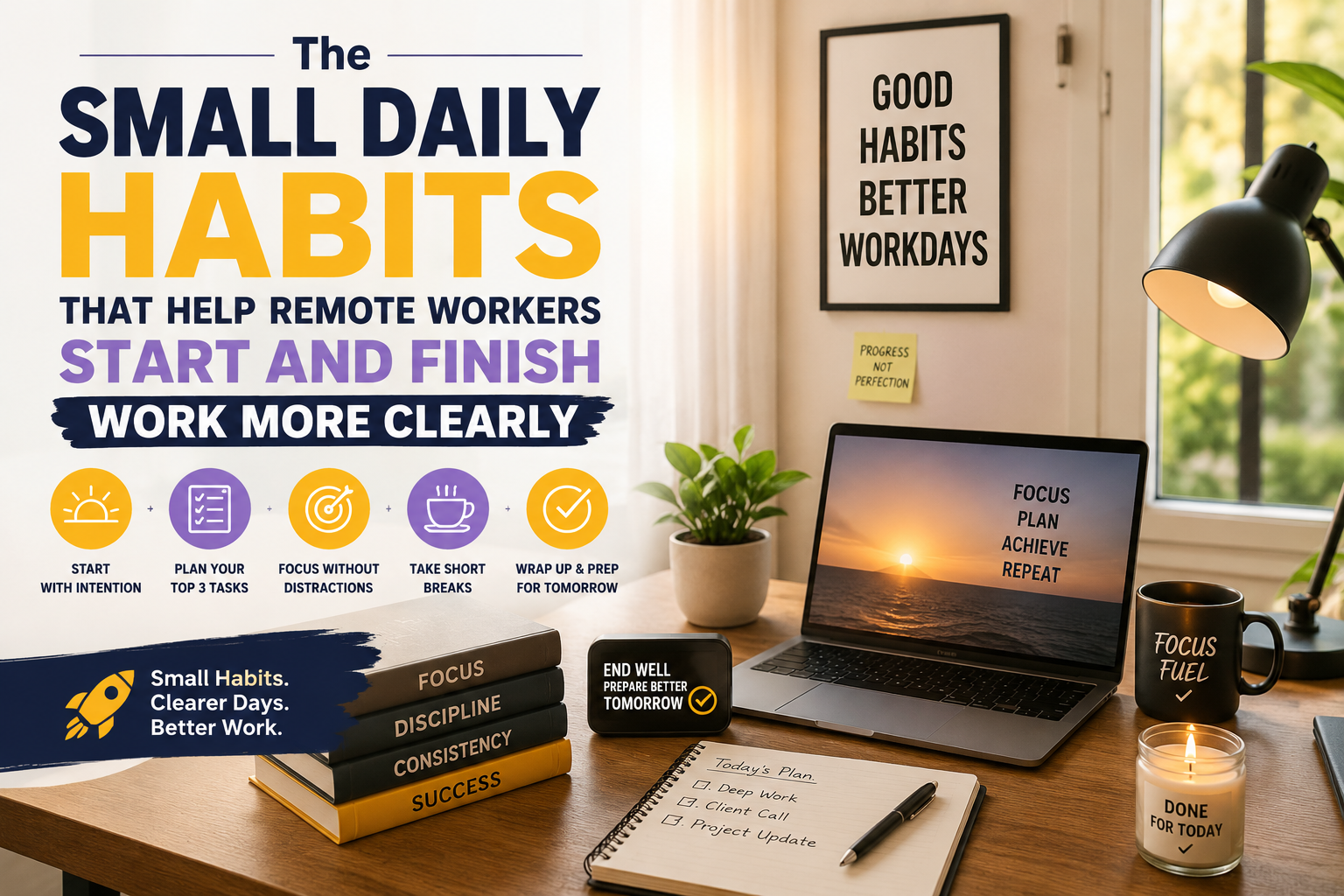
Starting and ending the workday with clear routines helps remote workers stay organized, reduce stress, and separate professional responsibilities from personal time. Small daily habits create consistency that improves focus and supports healthier long-term work patterns.
Remote work offers flexibility, but without clear routines the beginning and end of each workday can easily become blurred. Many people find themselves checking emails before breakfast or continuing work long after they intended to stop. Establishing small daily habits creates natural boundaries that improve productivity while protecting personal time.
These habits do not require major lifestyle changes. Instead, they focus on simple actions that prepare your mind for work and help you disconnect once the day is complete.
Why Daily Habits Matter
Habits reduce the amount of energy needed to make decisions throughout the day. When your morning and evening routines become consistent, you spend less time wondering what to do next and more time completing meaningful work.
A predictable routine also helps maintain motivation during busy weeks when priorities frequently change.
Simple Daily Habits That Improve Focus
Prepare Your Workspace
Begin each day by organizing your desk, opening necessary tools, and removing distractions.
Review Priorities
Select the three most important tasks before checking less important messages.
Take Planned Breaks
Short breaks throughout the day improve concentration and reduce mental fatigue.
Finish With a Daily Review
Spend a few minutes reviewing completed work and preparing tomorrow’s priorities.
Step-by-Step Routine
Daily Habit Comparison
| Habit | Benefit | Simple Action |
|---|---|---|
| Morning Planning | Better focus | Choose top priorities |
| Workspace Reset | Less clutter | Clean desk daily |
| Regular Breaks | Improved concentration | Walk for five minutes |
| End-of-Day Review | Clear finish | Prepare tomorrow’s tasks |
| Digital Shutdown | Better work-life balance | Close work apps completely |
Common Mistakes to Avoid
Beginning work without priorities often leads to unnecessary distractions.
Long periods of continuous work reduce focus and energy.
Failing to review unfinished work creates confusion the next day.
Continuing to check work messages during personal time affects balance.
Daily Checklist
- Workspace organized
- Top priorities selected
- Regular breaks scheduled
- Desk cleaned before leaving
- Tomorrow’s tasks prepared
- Work devices switched off
Helpful Resource: CDC – Ergonomics and Healthy Workspaces
Frequently Asked Questions
How long does it take to build a daily habit?
Consistency is more important than speed. Repeating small actions regularly helps them become part of your routine.
Should I follow the same routine every day?
A consistent structure is helpful, but you can adjust individual tasks when priorities change.
What is the best way to end a workday?
Review completed work, prepare tomorrow’s priorities, and fully disconnect from work applications.
Can small habits really improve productivity?
Yes. Small improvements repeated every day often create meaningful long-term results.
Conclusion
The small daily habits that help remote workers start and finish work more clearly create structure without limiting flexibility. By preparing your workspace, focusing on priorities, taking regular breaks, and ending each day with a simple review, you can improve productivity while maintaining healthier work habits and better work-life balance.