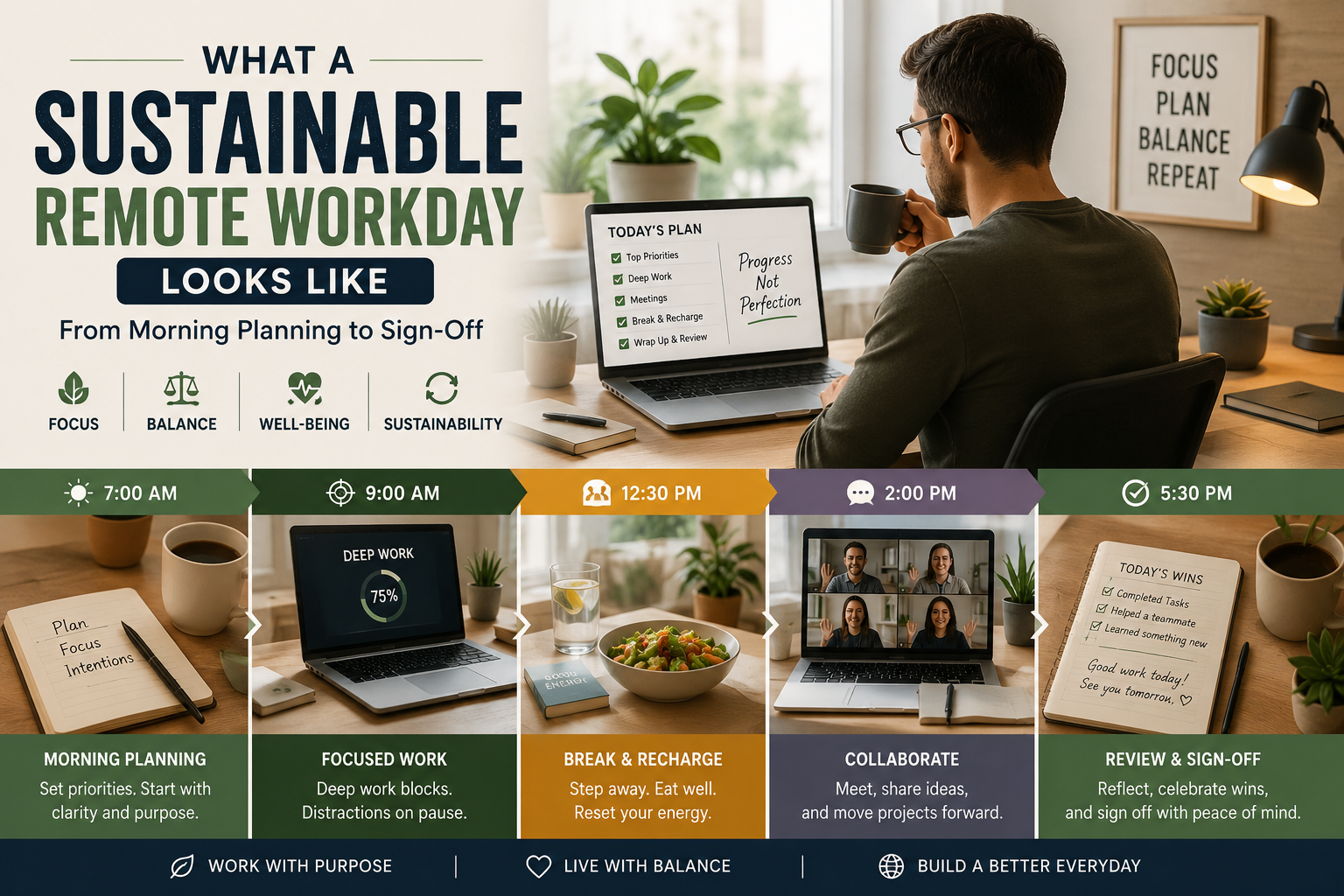
A sustainable remote workday is built on consistency rather than constant activity. From planning your morning to ending the day with confidence, a balanced routine helps you stay productive, protect your energy, and maintain a healthy work-life balance. This guide walks through each stage of a practical remote workday that supports long-term success.
Many people working from home discover that flexibility can easily turn into long working hours if there is no clear structure. What a sustainable remote workday looks like from morning planning to sign-off is less about rigid schedules and more about creating repeatable habits that improve focus without causing burnout. A thoughtful daily routine helps you complete meaningful work while leaving enough time for personal responsibilities and rest.
Why a Sustainable Remote Workday Matters
Remote work offers freedom, but it also requires personal discipline. Without clear routines, it’s easy to lose track of priorities, extend work into the evening, or become distracted throughout the day.
A sustainable routine provides predictable structure while remaining flexible enough to handle unexpected meetings, changing priorities, and personal commitments. It encourages consistent progress without relying on long hours or constant pressure.
Small daily habits often have a greater impact than occasional bursts of intense productivity.
What a Sustainable Remote Workday Looks Like From Morning Planning to Sign-Off
Start the Morning With a Clear Plan
Before opening email or messaging apps, review your schedule and identify your top priorities. A short planning session helps you begin with purpose instead of immediately reacting to new requests.
Create Focused Work Periods
Group similar tasks together and work in uninterrupted blocks whenever possible. Turning off unnecessary notifications during focus sessions can improve concentration and reduce context switching.
Take Meaningful Breaks
Stepping away from your desk for a few minutes helps refresh your mind. Stretching, walking, or simply changing your environment can improve energy and support better decision-making.
Finish With a Clear Sign-Off Routine
End your workday by reviewing completed tasks, organizing tomorrow’s priorities, and closing work-related applications. This simple habit helps create a healthy separation between work and personal life.
Step-by-Step Daily Routine
Step 1: Prepare Your Workspace
Arrange your desk, gather materials, and remove unnecessary distractions before starting work.
Step 2: Review Daily Goals
Select two or three high-priority tasks that will define a successful day.
Step 3: Complete Deep Work First
Handle important projects during your highest-energy hours before routine administrative work.
Step 4: Communicate Clearly
Provide updates, respond thoughtfully, and avoid checking communication platforms constantly.
Step 5: Close the Workday Intentionally
Review progress, prepare tomorrow’s task list, and step away from your workspace at your planned finish time.
Daily Habits That Support Long-Term Remote Work
| Habit | Benefit |
|---|---|
| Morning planning | Creates direction before distractions appear. |
| Focused work sessions | Improves quality and efficiency. |
| Scheduled breaks | Maintains energy throughout the day. |
| Organized workspace | Reduces unnecessary distractions. |
| Evening sign-off routine | Protects personal time after work. |
Common Mistakes to Avoid
- Starting work without a daily plan.
- Checking emails continuously throughout the day.
- Skipping lunch and regular breaks.
- Trying to multitask during focused work.
- Working well beyond your planned finish time.
- Leaving tomorrow’s planning until the next morning.
Remote Workday Checklist
- Prepared a distraction-free workspace.
- Identified today’s most important tasks.
- Completed focused work sessions.
- Took regular movement and hydration breaks.
- Responded to messages at planned intervals.
- Reviewed completed work before signing off.
- Prepared priorities for tomorrow.
Helpful Resource: CDC Ergonomics and Healthy Workspaces
Frequently Asked Questions
What makes a remote workday sustainable?
A sustainable workday balances focused work, regular breaks, realistic planning, and a clear end to the workday while supporting long-term well-being.
Should I follow the same schedule every day?
A consistent routine is helpful, but flexibility allows you to adapt when priorities or meetings change unexpectedly.
How often should I take breaks?
Short breaks every hour or two can improve focus, reduce fatigue, and support better productivity throughout the day.
Why is a sign-off routine important?
A consistent sign-off routine helps separate work from personal life, making it easier to relax and return refreshed the next day.
Conclusion
What a sustainable remote workday looks like from morning planning to sign-off is a combination of intentional routines, focused work, healthy breaks, and a defined finish to the day. By planning carefully, managing priorities, and protecting personal time, you can build a workday that supports both productivity and long-term well-being. Small improvements practiced consistently often create the strongest results over time.