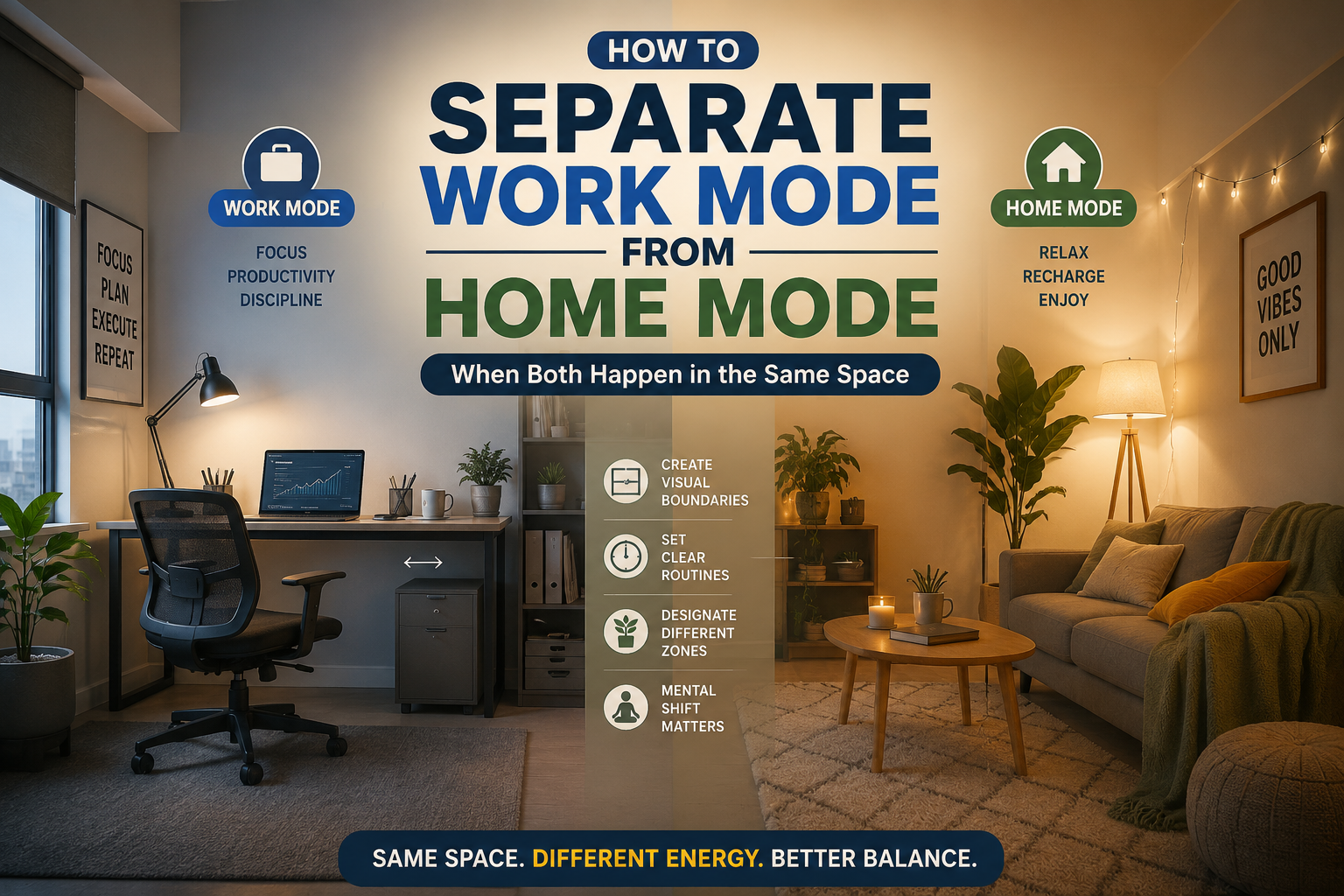
How to Separate Work Mode From Home Mode When Both Happen in the Same Space
Working from home can blur the line between professional responsibilities and personal life. Creating simple routines and physical boundaries helps you stay productive during work hours while fully enjoying your time at home afterward.
Introduction
How to separate work mode from home mode when both happen in the same space is a challenge many remote workers face every day. Without a commute or dedicated office building, it becomes easy to continue working long after the day should have ended.
Fortunately, you don’t need a separate office to create healthy boundaries. Small adjustments to your environment, habits, and daily routine can help your brain recognize when it’s time to focus and when it’s time to relax.
Why the Separation Matters
When work and home blend together, stress often follows you throughout the day. Separating the two improves focus, reduces mental fatigue, and supports better work-life balance.
- Improves concentration during work sessions.
- Reduces the temptation to work late every evening.
- Creates healthier personal routines.
- Supports better sleep and relaxation.
- Makes remote work more sustainable over time.
Simple Ways to Switch Between Work and Home Mode
Create a Dedicated Workspace
Even if you only have a small desk or corner, using one consistent area for work helps your brain associate that space with productivity.
Start and Finish at the Same Time
A regular schedule creates predictable boundaries. Begin work with a simple routine and finish your day by shutting down your computer and clearing your desk.
Change Your Environment
After work, leave your workspace if possible. Even moving to another room, opening a window, or taking a short walk can create a mental reset.
Use Different Activities
Replace work habits with personal ones. Reading, cooking, exercising, or spending time with family helps signal that your workday has ended.
Limit After-Hours Notifications
Silence unnecessary work notifications after your scheduled work hours. This reduces distractions and makes it easier to enjoy personal time.
Use a small visual change at the end of every workday, such as closing your laptop, switching off your desk lamp, or putting away work materials. These simple actions reinforce the transition from work mode to home mode.
Daily Transition Routine
| Activity | Purpose |
|---|---|
| Review completed tasks | Creates a sense of progress |
| Plan tomorrow | Reduces evening stress |
| Clean your workspace | Prepares for the next workday |
| Close work applications | Creates a digital boundary |
| Enjoy a personal activity | Signals the start of home time |
Common Mistakes to Avoid
- Working from the couch all day.
- Leaving work equipment open during the evening.
- Checking emails before going to bed.
- Skipping breaks throughout the day.
- Trying to multitask between work and household responsibilities.
Create Long-Term Healthy Habits
The goal isn’t to create perfect separation every day but to develop consistent habits that support both productivity and personal well-being. Small routines repeated regularly become automatic over time.
When your workday has a clear beginning and ending, it becomes easier to stay focused during work hours and fully relax afterward. These habits also help reduce burnout and improve overall satisfaction with remote work.
Helpful Resource: CDC – Healthy Work-Life Balance
Frequently Asked Questions
Do I need a separate room to work from home?
No. Even a dedicated desk or quiet corner can help create a mental distinction between work and personal life.
What is the best way to end a workday?
Finish by reviewing your work, planning tomorrow’s priorities, closing your computer, and moving into a personal activity.
Should I answer work messages after hours?
Unless your role requires it, limiting after-hours communication helps maintain healthier boundaries and better recovery.
How long does it take to build these habits?
Consistency matters more than speed. Practicing the same routine each day gradually makes the transition between work and home feel natural.
Conclusion
How to separate work mode from home mode when both happen in the same space is less about having the perfect home office and more about creating intentional routines. By establishing a dedicated workspace, following a consistent schedule, limiting after-hours interruptions, and building simple transition habits, you can enjoy greater focus during work and better relaxation afterward.
A few small daily changes can make remote work feel more organized, balanced, and enjoyable while protecting both your productivity and your personal life.