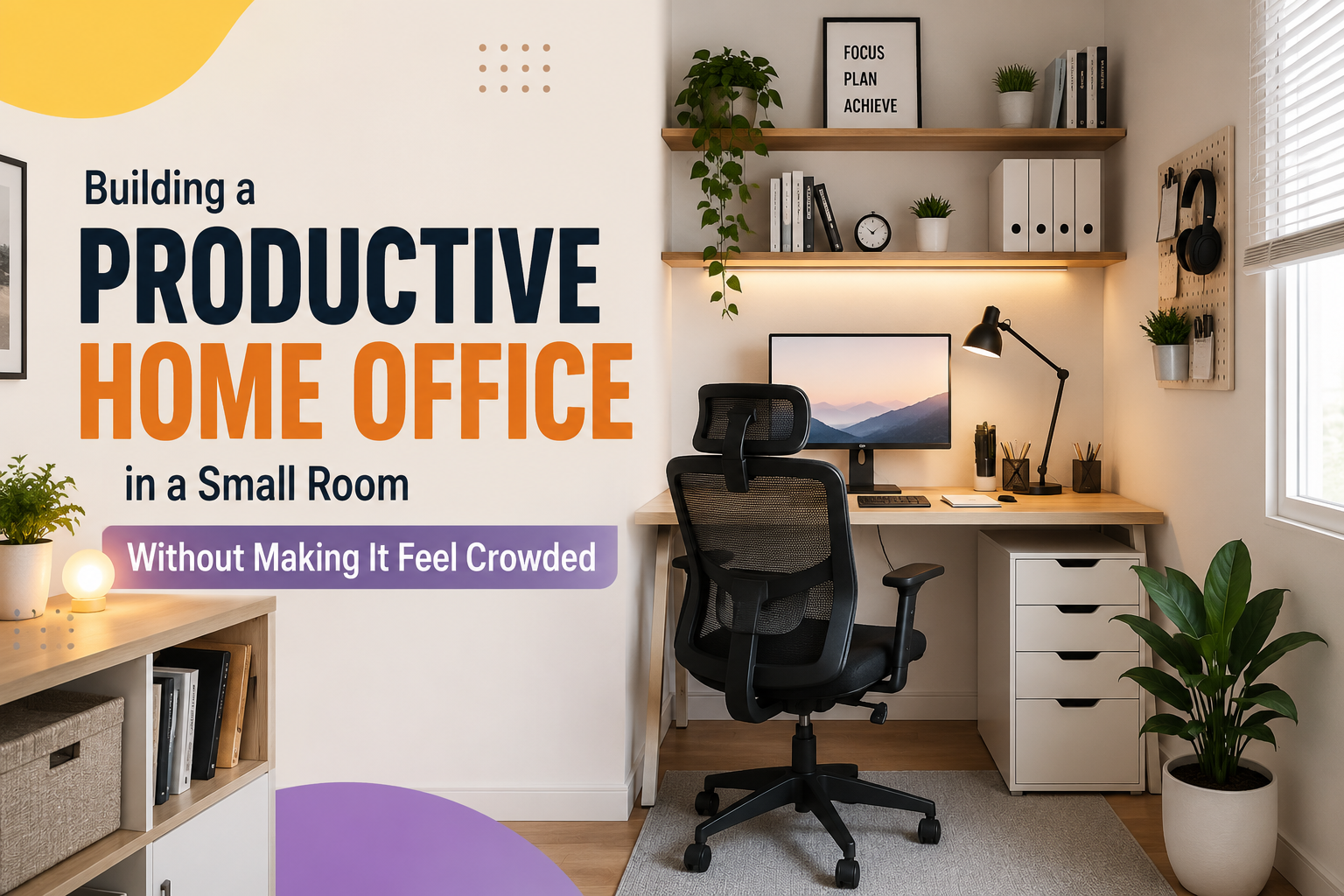
A small room can become an efficient, comfortable, and inspiring workspace with smart planning, thoughtful organization, and space-saving design choices that support daily productivity.
Creating a functional workspace in a compact room can seem challenging, but it is entirely possible with the right approach. Building a productive home office in a small room without making it feel crowded focuses on maximizing available space while maintaining comfort, organization, and a pleasant atmosphere. The goal isn’t simply fitting furniture into a room—it’s designing a workspace that supports concentration without overwhelming the area.
Whether you’re working remotely full-time, studying online, or managing a side business, a carefully planned home office helps you stay focused and comfortable throughout the day. Even the smallest rooms can feel open, organized, and productive with a few thoughtful adjustments.
Why Smart Space Planning Matters
A cramped workspace often leads to distractions, clutter, and reduced productivity. Limited space can also make a room feel stressful rather than motivating. Careful planning allows every piece of furniture and every storage solution to serve a purpose.
Instead of filling every available corner, focus on creating balance. Open space is just as valuable as storage because it makes the room feel larger and more comfortable during long work sessions.
Choosing the Right Furniture for Small Spaces
Select a Compact Desk
Choose a desk that fits your work requirements without occupying unnecessary floor space. Wall-mounted desks, corner desks, and narrow workstations are excellent options for smaller rooms.
Invest in an Ergonomic Chair
A supportive chair improves posture during long workdays. If space is limited, consider a chair that slides completely beneath the desk when not in use.
Use Vertical Storage
Install floating shelves or wall organizers to keep books, office supplies, and decorative items off the desk while maximizing vertical space.
Choose Multi-Purpose Furniture
Furniture with built-in storage, such as desks with drawers or cabinets, reduces clutter while minimizing the need for additional storage units.
Building a Productive Home Office in a Small Room Without Making It Feel Crowded
Creating a productive workspace is easier when every decision supports both comfort and organization. Focus on practical improvements rather than adding unnecessary furniture or decorations.
Step 1: Pick the Best Corner
Place your workspace near natural light if possible. Positioning your desk beside a window helps brighten the room and reduces reliance on artificial lighting during the day.
Step 2: Keep the Desk Surface Clear
Only keep essential items such as your computer, notebook, and a small desk lamp on the desk. Store everything else inside drawers or wall organizers.
Step 3: Organize Cables
Messy cables create visual clutter even in tidy rooms. Cable clips, sleeves, and under-desk organizers keep wiring hidden and easier to manage.
Step 4: Use Light Colors
White, beige, light gray, and soft pastel shades reflect more light and make compact rooms appear larger and brighter.
Step 5: Add Simple Personal Touches
A single plant, framed artwork, or minimal decorative item makes the workspace inviting without making it feel overcrowded.
| Space-Saving Solution | Benefit |
|---|---|
| Floating Shelves | Free up desk space while increasing storage. |
| Wall Organizer | Keeps office supplies easy to reach. |
| Compact Desk | Provides workspace without dominating the room. |
| Drawer Storage | Reduces visible clutter. |
| Monitor Stand | Creates additional storage underneath the screen. |
Design Choices That Make Small Rooms Feel Larger
Good design can visually expand even the smallest home office. Natural light, mirrors, and clean color schemes create a brighter environment. Avoid oversized furniture and instead choose streamlined pieces with simple shapes.
Keeping decorations minimal also helps maintain a spacious appearance. Instead of displaying many small items, choose one or two meaningful accessories that add personality without creating visual clutter.
Common Mistakes to Avoid
- Choosing furniture that is too large for the room.
- Filling every available wall with shelves.
- Allowing paperwork and cables to pile up.
- Using dark colors throughout the space.
- Blocking natural light with unnecessary furniture.
- Adding decorative items that reduce usable workspace.
Small Home Office Checklist
- ✔ Desk fits comfortably within the room.
- ✔ Chair supports good posture.
- ✔ Frequently used items are easy to access.
- ✔ Lighting is bright and comfortable.
- ✔ Storage keeps clutter hidden.
- ✔ Walkways remain clear and open.
Helpful Resource: OSHA Ergonomics
Frequently Asked Questions
Can a very small room become a productive office?
Yes. Careful furniture selection, vertical storage, and good organization can transform even compact spaces into efficient work environments.
What desk works best in a small room?
Compact desks, corner desks, or wall-mounted desks are excellent choices because they maximize available floor space.
How can I reduce clutter?
Use drawers, shelves, cable organizers, and keep only daily essentials visible on your desk.
Do decorations make a small office feel crowded?
Not if they’re used sparingly. A small plant or framed picture can improve the atmosphere without overwhelming the room.
Conclusion
Building a productive home office in a small room without making it feel crowded is about using available space wisely rather than simply adding more furniture. Smart storage, ergonomic furniture, thoughtful organization, and a clean layout create a workspace that feels open, comfortable, and motivating. By focusing on functionality and simplicity, you can enjoy a home office that supports productivity while making even a compact room feel welcoming and efficient.