Workspace Productivity Guide
A well-designed workspace does much more than hold a desk and chair. The environment around you influences your attention, comfort, motivation, and overall work experience. Whether you work from home, study online, or spend long hours completing personal projects, creating a space that encourages focus can make daily tasks feel more manageable.
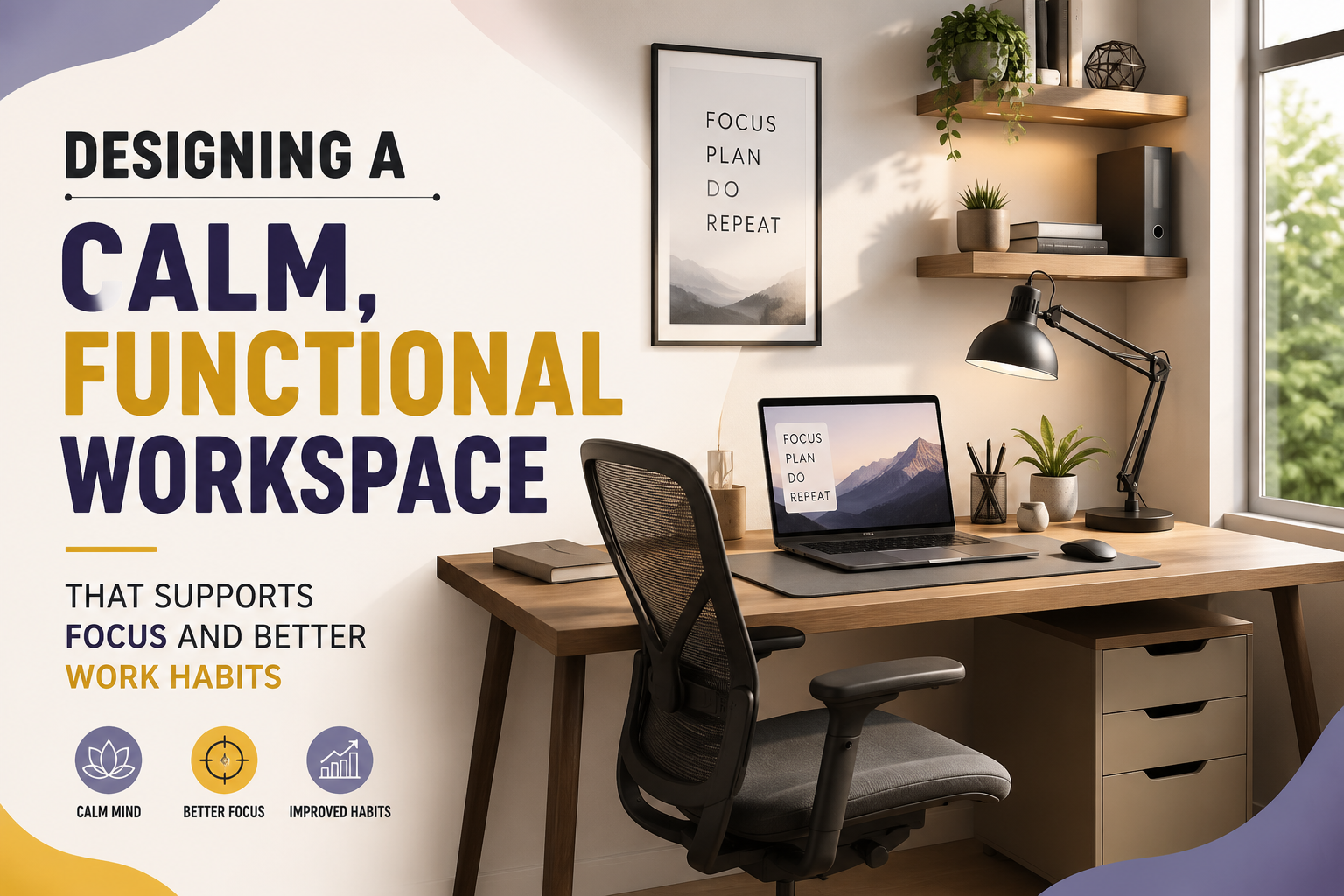
Designing a calm, functional workspace begins with understanding how your surroundings affect your habits. Small improvements such as reducing clutter, improving lighting, and organizing essential tools can create an atmosphere where productivity feels natural instead of forced.
Why a Calm Workspace Matters
A busy environment often creates mental distractions before work even begins. Visual clutter, poor seating, unnecessary noise, and uncomfortable lighting all compete for your attention.
A thoughtfully arranged workspace encourages better concentration by making important items easier to access while reducing unnecessary interruptions. Instead of constantly searching for supplies or adjusting uncomfortable equipment, your energy stays focused on meaningful work.
Over time, this consistency helps build better work habits because your surroundings naturally support productive routines.
Essential Elements of a Functional Workspace
Comfortable Seating
Your chair should support good posture during extended work sessions. Sitting comfortably reduces physical strain and helps maintain focus throughout the day.
Proper Lighting
Natural daylight is often the best choice whenever possible. If natural light is limited, use a quality desk lamp that provides balanced illumination without causing glare on your screen.
Organized Desk Surface
Keep only frequently used items within easy reach. A cleaner desk creates a calmer visual environment and simplifies everyday tasks.
Storage Solutions
Drawers, shelves, and organizers help prevent clutter from building up while making important documents and supplies easier to locate.
Simple Steps to Create a Better Workspace
- Choose a quiet location whenever possible.
- Remove unnecessary items from your desk.
- Arrange your monitor at eye level.
- Place frequently used tools within easy reach.
- Add comfortable lighting.
- Include one or two calming decorative items such as a small plant.
- Keep cables organized to reduce visual clutter.
- End each workday by resetting your workspace for tomorrow.
| Workspace Element | Benefit | Easy Improvement |
|---|---|---|
| Lighting | Reduces eye strain | Use natural light or an adjustable lamp |
| Desk Organization | Less distraction | Store unused items away |
| Chair | Better posture | Adjust height and back support |
| Monitor Position | Comfortable viewing | Keep screen at eye level |
| Storage | Cleaner workspace | Use drawers, trays, or shelves |
Common Mistakes to Avoid
- Allowing paperwork and supplies to pile up.
- Using uncomfortable furniture for long work sessions.
- Ignoring lighting conditions.
- Keeping unnecessary gadgets on the desk.
- Skipping regular cleaning and organization.
- Trying to work in noisy, distracting areas whenever quieter options exist.
Healthy Habits That Support Productivity
Your workspace works best when paired with healthy routines. Taking short breaks, maintaining regular work hours, staying hydrated, and limiting unnecessary notifications all contribute to better focus.
Instead of aiming for perfection, build small habits that become part of your daily routine. Consistency often produces better long-term results than making dramatic changes that are difficult to maintain.
Daily Workspace Checklist
- Desk is clean and organized.
- Chair and monitor are adjusted comfortably.
- Water bottle is nearby.
- Phone notifications are limited.
- Today’s priorities are clearly listed.
- Workspace is reset before finishing the day.
Helpful Resource: CDC Workplace Ergonomics Guide
Frequently Asked Questions
How often should I organize my workspace?
A quick daily reset combined with a more detailed weekly cleanup helps keep your workspace functional without becoming overwhelming.
Does a small workspace limit productivity?
Not necessarily. Even a compact area can support productive work when it is organized efficiently and free from unnecessary clutter.
Should I decorate my workspace?
Yes. Simple decorations such as plants, artwork, or personal photos can create a more pleasant environment without becoming distracting.
What is the biggest improvement most people can make?
Removing clutter and improving organization usually delivers immediate benefits for focus and efficiency.
Conclusion
Creating a calm, functional workspace is less about buying expensive furniture and more about designing an environment that supports your daily habits. By improving comfort, reducing distractions, organizing essential tools, and maintaining simple routines, your workspace becomes a place where focus comes more naturally. Small changes made consistently can lead to better productivity, improved comfort, and healthier work habits over time.