Remote Work Productivity Guide
Working remotely offers greater freedom, but it also introduces frequent changes that can interrupt even the most carefully planned schedule. New assignments, urgent meetings, shifting priorities, and personal responsibilities often appear without much notice. Instead of relying on a rigid timetable, a flexible routine allows you to stay productive while adjusting to changing demands.
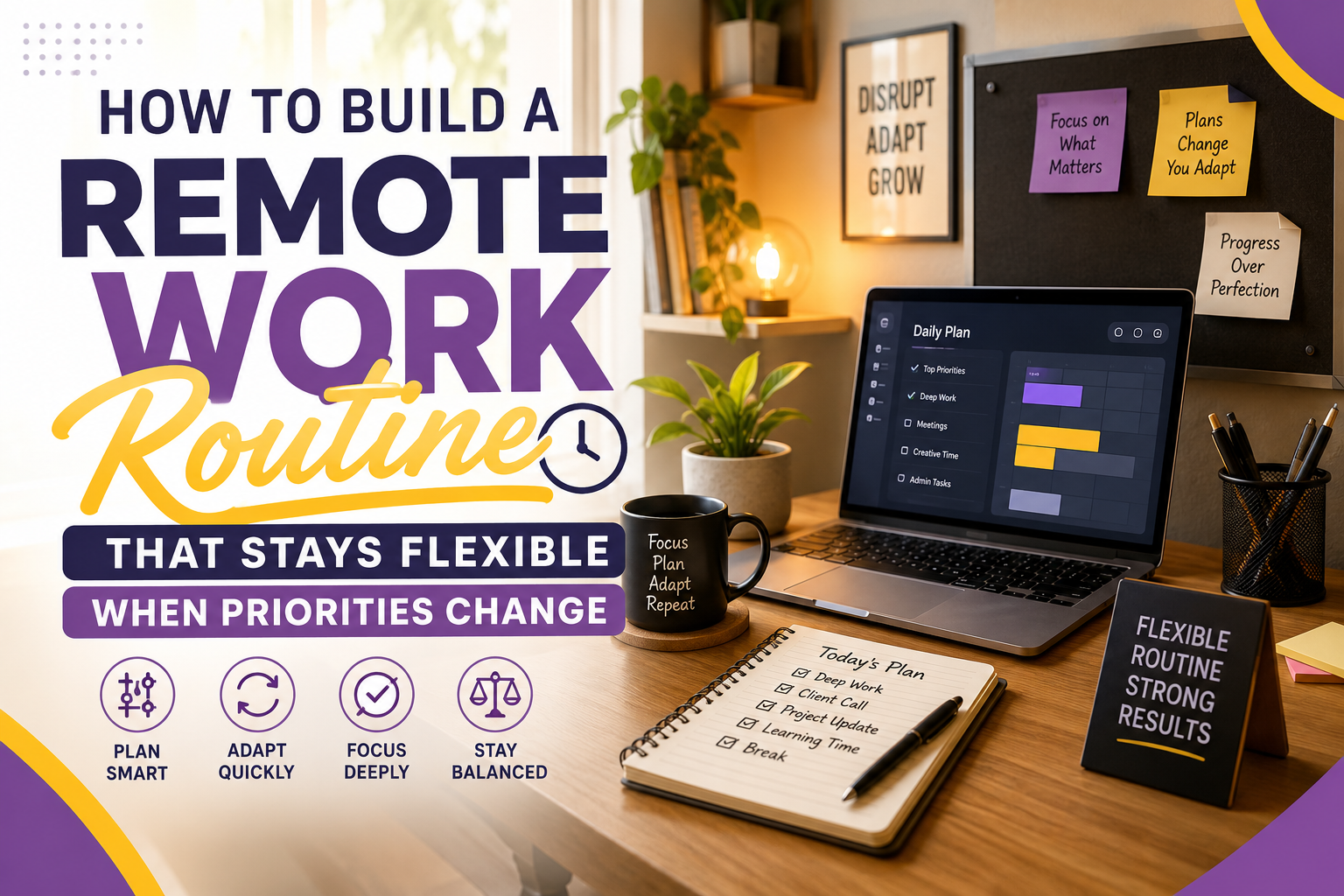
Building a remote work routine that stays flexible when priorities change starts with creating systems rather than strict schedules. When your daily workflow is adaptable, you can respond confidently to unexpected tasks without feeling overwhelmed or losing focus on important work.
Why Flexibility Is Essential in Remote Work
Many remote workers assume that productivity comes from following the exact same schedule every day. In reality, remote work often requires adjusting plans as new information arrives. Flexible routines make these adjustments easier because they focus on priorities instead of fixed timelines.
When your routine allows room for change, you can handle urgent requests, collaborate effectively with teammates, and still make steady progress on long-term goals.
Key Elements of a Flexible Remote Work Routine
Start With Priorities
Identify the three most important tasks you want to complete each day. This gives you a clear direction even if smaller activities need to be rearranged.
Create Time Blocks
Instead of assigning exact times for every task, reserve larger blocks for focused work, meetings, communication, and breaks.
Allow Buffer Time
Adding short gaps between scheduled activities gives you space to handle unexpected requests without disrupting your entire day.
Review Progress Regularly
Spend a few minutes during the day reviewing what has changed and adjusting your priorities accordingly.
Step-by-Step Plan for a More Adaptable Schedule
- List today’s highest-priority tasks.
- Estimate how much focused work each task requires.
- Create flexible work blocks instead of hourly schedules.
- Leave open time for unexpected meetings or requests.
- Complete high-value work during your most productive hours.
- Review your task list halfway through the day.
- Move unfinished work without feeling pressured to complete everything immediately.
- End each day by preparing tomorrow’s priorities.
| Routine Element | Purpose | Simple Practice |
|---|---|---|
| Morning Planning | Clarify priorities | Choose three key tasks |
| Focus Blocks | Deep work | Limit interruptions |
| Buffer Time | Handle changes | Leave short gaps |
| Midday Review | Adjust priorities | Update your schedule |
| End-of-Day Review | Prepare tomorrow | Organize unfinished work |
Common Mistakes to Avoid
- Scheduling every minute of the day.
- Ignoring breaks during busy periods.
- Treating every task as equally urgent.
- Skipping daily planning.
- Constantly switching between unrelated tasks.
- Trying to complete everything immediately.
Building Better Remote Work Habits
Healthy routines support long-term productivity more effectively than strict schedules. Maintain regular working hours when possible, communicate clearly with teammates, and organize your workspace before beginning each day.
Using simple planning tools such as digital calendars, task lists, or project boards can also help you manage changing priorities without creating unnecessary stress. Consistency comes from following reliable habits rather than following identical schedules every day.
Daily Flexible Routine Checklist
- Review today’s top priorities.
- Schedule focused work blocks.
- Leave time for unexpected tasks.
- Take regular short breaks.
- Review progress during the afternoon.
- Prepare tomorrow’s task list.
Helpful Resource: Asana – Time Management Tips
Frequently Asked Questions
Why should a remote work routine be flexible?
Unexpected meetings, urgent projects, and changing priorities are common in remote work. Flexibility helps you respond without losing productivity.
How many priorities should I choose each day?
Most people benefit from selecting three important tasks while allowing flexibility for additional work if time permits.
Should I follow the same schedule every day?
A consistent structure is helpful, but your routine should allow adjustments when priorities change instead of remaining completely fixed.
How often should I review my schedule?
A quick midday review helps you adapt to new information and reorganize your remaining tasks efficiently.
Conclusion
Building a remote work routine that stays flexible when priorities change allows you to remain productive without becoming overwhelmed by unexpected demands. By focusing on priorities, using adaptable time blocks, reviewing progress regularly, and maintaining healthy work habits, you can create a routine that supports both efficiency and balance. Small adjustments made consistently will help you handle changing workloads with greater confidence and less stress.