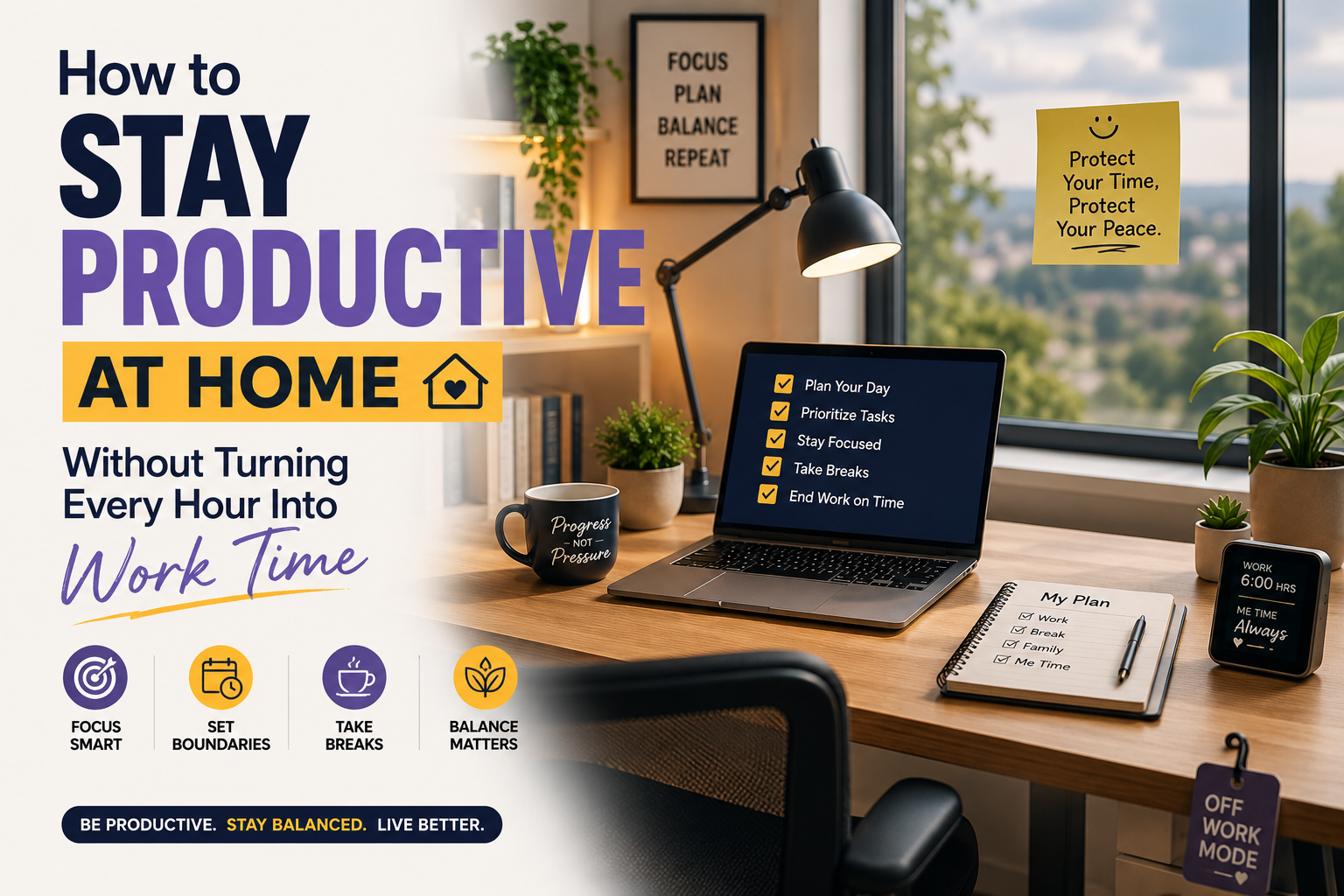
Working from home offers flexibility, but it can also make it difficult to separate work from personal life. This guide explains practical ways to stay productive at home without allowing work to fill every hour of your day. You’ll learn how to build healthier routines, improve focus, and protect your personal time while maintaining consistent performance.
Many people search for ways to stay productive at home without turning every hour into work time because remote work often blurs the line between professional responsibilities and everyday life. Without clear boundaries, it becomes easy to check emails late at night, skip breaks, or feel guilty when stepping away from the computer. Sustainable productivity is not about working longer—it is about working smarter while leaving enough time for rest, family, hobbies, and personal well-being.
Why Productivity Doesn’t Mean Working All Day
Productivity is often misunderstood as staying busy from morning until bedtime. In reality, productive people focus on completing meaningful tasks efficiently instead of simply spending more hours working.
When your schedule includes regular breaks and a clear finish time, your energy remains more consistent throughout the week. Short periods of focused work are usually far more effective than long sessions filled with distractions and mental fatigue.
Creating healthier work habits also reduces stress, improves concentration, and makes it easier to enjoy your personal life after work ends.
How to Stay Productive at Home Without Turning Every Hour Into Work Time
Create a Dedicated Workspace
You do not need a large home office to work effectively. Even a small desk, quiet corner, or organized table can create a mental separation between work and relaxation. Keeping work materials in one location also reduces unnecessary distractions.
Set Daily Priorities
Instead of trying to complete everything, identify the three most important tasks each morning. Finishing high-value work first helps you make steady progress without feeling overwhelmed.
Use Time Blocks
Divide your day into focused work sessions followed by short breaks. This simple approach helps maintain attention while preventing burnout. You can adjust block lengths based on your workload and personal preferences.
Respect Your Finish Time
Choose a realistic end-of-day time and stick to it whenever possible. Closing your laptop, turning off notifications, and leaving your workspace sends a clear signal that the workday has ended.
Step-by-Step Routine for Better Work-Life Balance
Step 1: Prepare Before Starting
Review your schedule, organize your workspace, and decide what success looks like for the day.
Step 2: Focus on One Task
Avoid switching constantly between emails, meetings, and projects. Single-tasking often improves both speed and quality.
Step 3: Schedule Regular Breaks
Walk around, stretch, drink water, or simply rest your eyes for a few minutes before returning to work.
Step 4: Limit After-Hours Checking
Unless absolutely necessary, avoid reopening work messages once your workday has officially finished.
Step 5: End with Tomorrow’s Plan
Spend a few minutes listing tomorrow’s priorities so you can begin the next day with clarity.
Simple Daily Habits That Support Long-Term Productivity
| Habit | Benefit |
|---|---|
| Morning planning | Creates clear priorities before distractions begin. |
| Scheduled breaks | Helps maintain focus and reduces mental fatigue. |
| Organized workspace | Minimizes clutter and supports better concentration. |
| End-of-day review | Prepares you for a smoother start tomorrow. |
| Consistent work hours | Protects personal time while improving routine. |
Common Mistakes to Avoid
- Working without a daily plan.
- Keeping notifications active all day.
- Skipping meals and breaks.
- Trying to multitask constantly.
- Continuing work long after scheduled hours.
- Ignoring physical movement throughout the day.
Daily Productivity Checklist
- Reviewed today’s priorities.
- Prepared an organized workspace.
- Worked in focused sessions.
- Took regular short breaks.
- Limited unnecessary distractions.
- Finished work at the planned time.
- Prepared tomorrow’s task list.
Helpful Resource: CDC Workplace Ergonomics Guidance
Frequently Asked Questions
How many hours should I work from home?
Your schedule depends on your job, but maintaining consistent working hours with regular breaks generally supports healthier productivity than working continuously.
Can taking breaks improve productivity?
Yes. Short breaks help reduce mental fatigue, refresh attention, and improve concentration during focused work sessions.
How do I avoid overworking at home?
Create a clear finishing routine, turn off work notifications after hours, and avoid returning to unfinished tasks late in the evening unless absolutely necessary.
What is the biggest productivity habit?
Consistently identifying your most important tasks before starting work helps you stay focused without filling your entire day with unnecessary activity.
Conclusion
Learning how to stay productive at home without turning every hour into work time is about creating sustainable habits rather than extending your schedule. Clear priorities, focused work sessions, regular breaks, and a defined end to the workday all contribute to better performance and a healthier work-life balance. By building routines that protect both productivity and personal time, you can enjoy the flexibility of working from home while avoiding the feeling of being constantly connected.