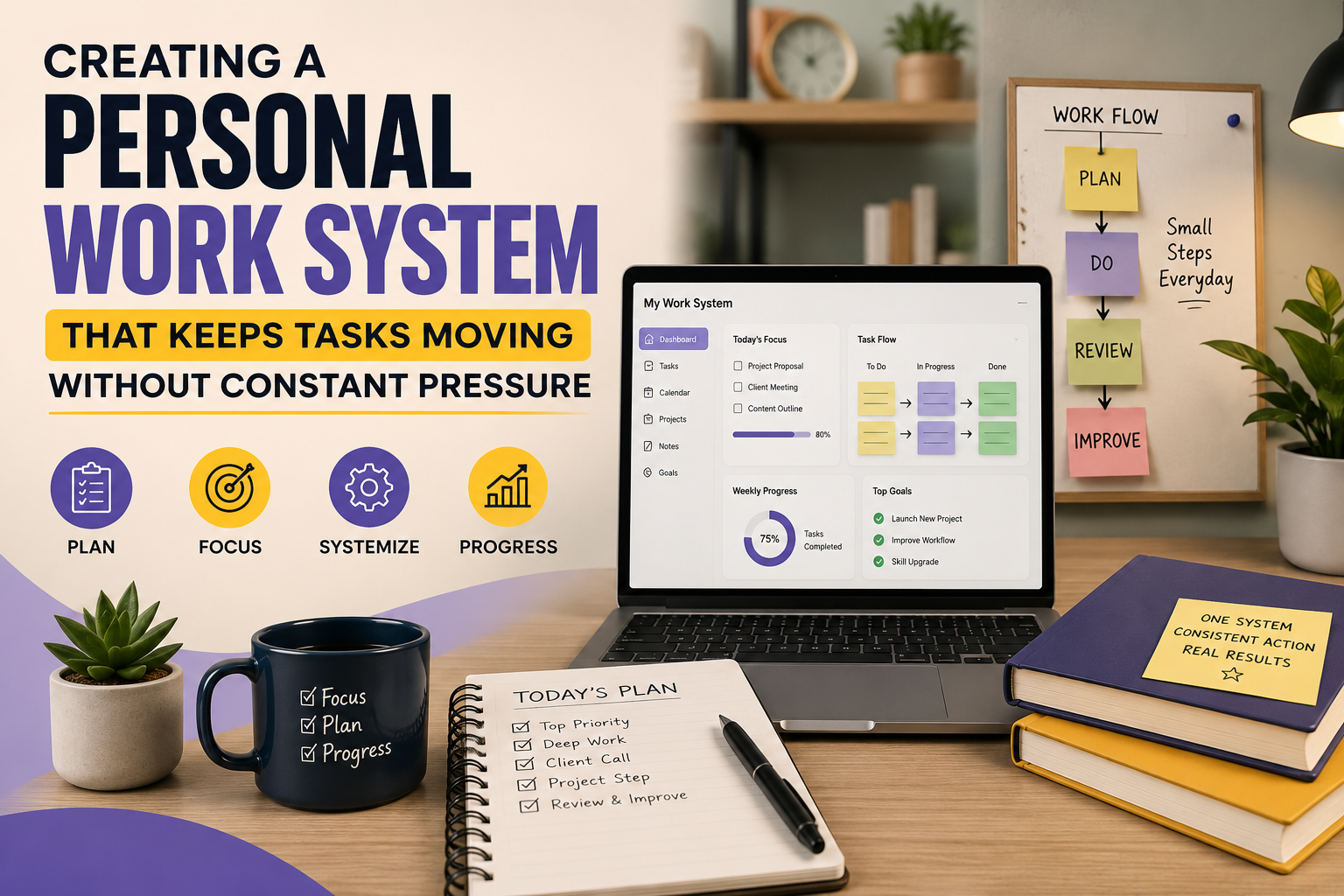
A personal work system helps you organize tasks, reduce stress, and make consistent progress without feeling overwhelmed. Instead of relying on constant motivation or working under pressure, a simple and flexible system allows you to manage priorities, stay focused, and maintain a healthier work-life balance. This guide explains how to build a work system that fits your daily routine and keeps projects moving steadily.
Many people struggle with unfinished tasks not because they lack ability, but because they lack a reliable process. Creating a personal work system that keeps tasks moving without constant pressure means developing routines that make progress easier every day. Whether you work remotely, study from home, manage a business, or handle personal projects, a structured system reduces decision fatigue and helps you focus on meaningful work instead of constantly reacting to new demands.
Why a Personal Work System Matters
A work system removes unnecessary guesswork from your day. Instead of wondering what to do next, you already know your priorities and have a simple process for completing them.
A good system also helps reduce mental clutter. Rather than trying to remember every responsibility, you keep tasks organized in one place, making it easier to concentrate on the work that matters most.
Consistency often produces better long-term results than occasional bursts of intense productivity. A manageable routine is easier to maintain and less likely to lead to burnout.
Creating a Personal Work System That Keeps Tasks Moving Without Constant Pressure
Capture Every Task
Write down every task, idea, or responsibility instead of trying to remember everything mentally. A notebook, planner, or trusted digital app can become your central task list.
Prioritize What Truly Matters
Separate important work from less urgent activities. Focus first on tasks that create meaningful progress instead of simply staying busy.
Break Large Projects Into Small Actions
Big goals often feel overwhelming because they are too broad. Dividing projects into smaller, manageable steps makes it easier to start and maintain momentum.
Review Your List Daily
Spend a few minutes each morning checking priorities and adjusting your schedule if needed. A short review keeps your system current without becoming complicated.
Step-by-Step Process for Building Your Work System
Step 1: Choose One Task Manager
Select one trusted location for all your tasks. Avoid spreading information across multiple notebooks, sticky notes, and apps.
Step 2: Plan Tomorrow Before Finishing Today
At the end of each workday, list the most important tasks for tomorrow. This reduces morning uncertainty.
Step 3: Work in Focused Sessions
Set aside distraction-free blocks of time for meaningful work before checking messages or social media.
Step 4: Leave Room for Flexibility
Unexpected changes happen. A flexible schedule allows adjustments without feeling like the entire day has failed.
Step 5: Reflect Weekly
Review completed work, identify recurring obstacles, and improve your system based on real experience.
Habits That Keep Work Moving Smoothly
| Habit | Why It Helps |
|---|---|
| Daily planning | Provides clear direction before work begins. |
| Single task focus | Improves concentration and reduces mistakes. |
| Weekly review | Helps identify progress and future priorities. |
| Realistic scheduling | Prevents overloaded to-do lists. |
| Regular breaks | Supports energy and long-term productivity. |
Common Mistakes to Avoid
- Creating an overly complicated planning system.
- Keeping unrealistic daily task lists.
- Ignoring completed accomplishments.
- Trying to multitask continuously.
- Changing productivity methods every week.
- Working without regular review sessions.
Personal Work System Checklist
- All tasks are stored in one trusted place.
- Today’s priorities are clearly identified.
- Large projects are divided into smaller steps.
- Focused work sessions are scheduled.
- Breaks are included throughout the day.
- Tomorrow’s tasks are prepared before finishing work.
- A weekly review is part of the routine.
Helpful Resource: Todoist Productivity Methods Guide
Frequently Asked Questions
What is a personal work system?
A personal work system is a consistent method for organizing, prioritizing, and completing tasks efficiently while reducing unnecessary stress.
Do I need productivity software?
No. A notebook, paper planner, or simple digital app can work equally well if you use it consistently.
How often should I review my task list?
A quick review each day and a more detailed review once a week usually keeps your system organized and effective.
Can a simple work system improve work-life balance?
Yes. Better organization reduces last-minute pressure, making it easier to finish work on time and enjoy personal activities.
Conclusion
Creating a personal work system that keeps tasks moving without constant pressure is about building sustainable habits instead of chasing perfect productivity. By capturing tasks, setting clear priorities, working in focused sessions, and reviewing progress regularly, you can accomplish meaningful work while maintaining flexibility and reducing stress. A simple system that fits your lifestyle will often deliver better long-term results than a complicated process that is difficult to maintain.