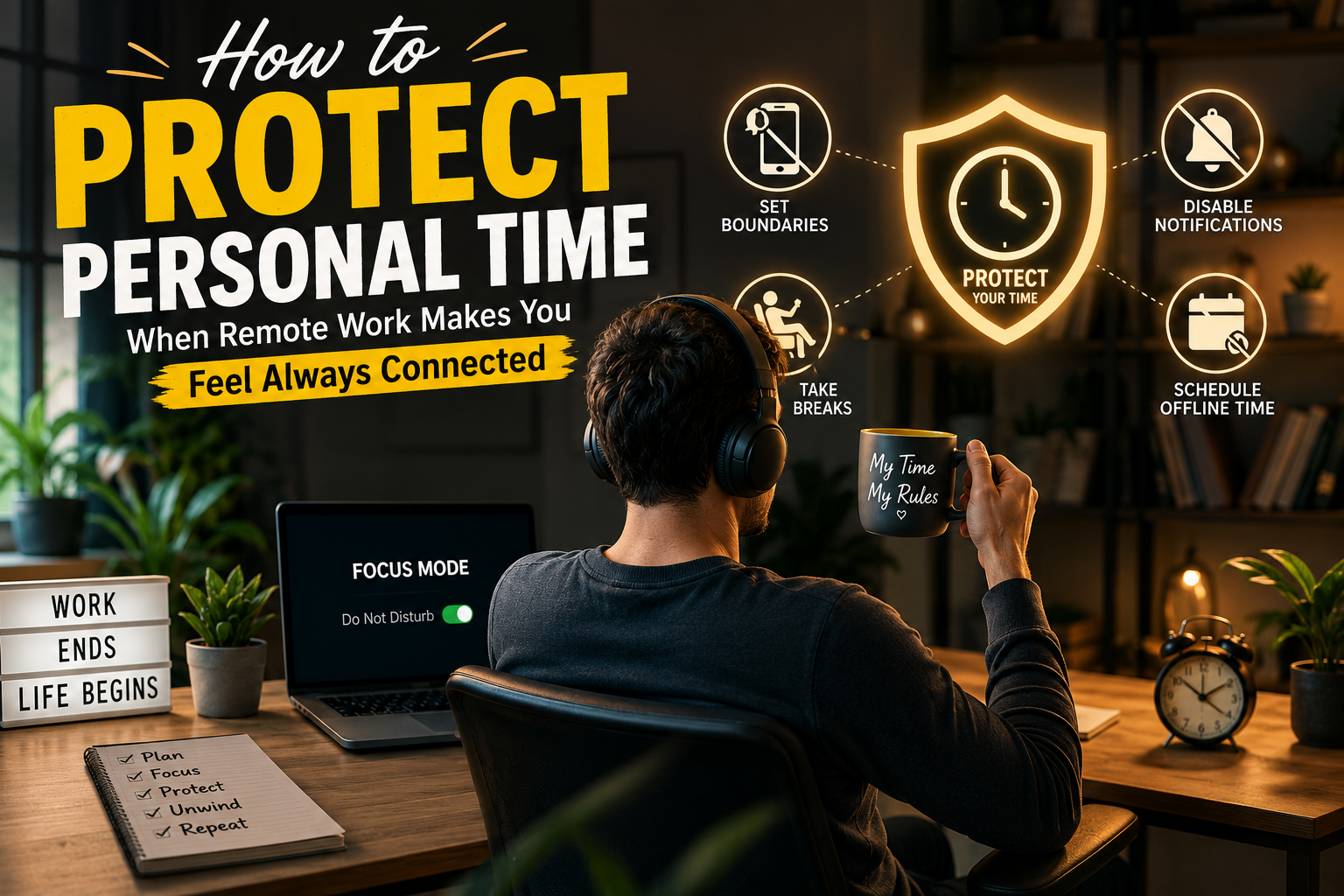
How to Protect Personal Time When Remote Work Makes You Feel Always Connected
Remote work offers flexibility, but constant notifications and easy access to work can make it difficult to truly disconnect. Learning how to protect your personal time helps improve focus, reduce stress, and maintain a healthier work-life balance.
Introduction
Learning how to protect personal time when remote work makes you feel always connected is essential for maintaining long-term productivity and well-being. When your home becomes your office, it is easy to check one more email, respond to another message, or continue working long after your scheduled hours have ended.
While staying connected supports teamwork, constantly being available can leave you mentally exhausted. Establishing healthy routines and communication habits allows you to remain dependable without sacrificing your personal life.
Why Personal Time Matters
Taking time away from work is not about doing less. It allows your mind to recover, improves concentration, and helps you return to work with fresh energy. Without regular breaks from work responsibilities, stress can gradually build and affect both performance and overall well-being.
- Reduces mental fatigue and burnout.
- Improves concentration during work hours.
- Supports healthier relationships outside work.
- Encourages better sleep and recovery.
- Creates a sustainable remote work routine.
Simple Ways to Protect Personal Time
Set Clear Working Hours
Choose a realistic work schedule and stick to it as consistently as possible. Let your team know when you are available so expectations remain clear.
Turn Off Non-Essential Notifications
After your workday ends, silence work-related alerts unless your role requires emergency availability. Constant notifications make it harder to fully relax.
Create an End-of-Day Ritual
Close work applications, organize your desk, write tomorrow’s priorities, and leave your workspace. Repeating these actions daily helps your brain recognize that work has ended.
Separate Work and Personal Activities
Even if you work in a shared room, switching to a different activity such as exercising, cooking, reading, or spending time outdoors creates a healthy transition.
Communicate Boundaries Professionally
Most colleagues appreciate knowing your normal response times. Clear communication prevents misunderstandings while allowing everyone to collaborate effectively.
Try placing your laptop out of sight after work. Removing visual reminders makes it easier to mentally disconnect and enjoy your personal time without feeling tempted to check emails.
Healthy Daily Boundary Routine
| Habit | Purpose |
|---|---|
| Finish priority tasks | Reduces unfinished work stress |
| Plan tomorrow’s schedule | Creates a smoother morning |
| Close work tools | Marks the end of work hours |
| Silence notifications | Protects personal focus |
| Enjoy a personal activity | Creates a healthy work-life transition |
Common Mistakes to Avoid
- Checking emails every few minutes after work.
- Feeling guilty about logging off on time.
- Keeping work chat open throughout the evening.
- Skipping breaks during busy days.
- Assuming every message requires an immediate response.
Build Sustainable Remote Work Habits
Protecting personal time is easier when healthy habits become part of your daily routine. Consistency matters more than perfection. Small actions repeated every day gradually create stronger boundaries without affecting teamwork.
Focus on being dependable during your scheduled work hours rather than appearing available at every moment. High-quality communication, reliable delivery, and thoughtful planning often matter more than instant replies.
As these habits become routine, you will likely notice better concentration during work, greater relaxation after hours, and a healthier balance between professional responsibilities and personal life.
Helpful Resource: American Psychological Association – Work-Life Balance
Frequently Asked Questions
Why do I always feel connected to work?
Remote work often removes physical separation between work and home. Notifications, communication apps, and flexible schedules can make it difficult to mentally disconnect.
Should I respond to every message immediately?
Not usually. Unless your role requires urgent responses, setting reasonable response expectations helps maintain healthy boundaries while supporting teamwork.
Can protecting personal time improve productivity?
Yes. Regular recovery allows you to return to work with better focus, creativity, and energy.
What is the easiest habit to start today?
Choose a consistent time to close your work applications and stop checking work notifications after your scheduled workday ends.
Conclusion
Understanding how to protect personal time when remote work makes you feel always connected is an important part of building a sustainable remote work lifestyle. By setting clear work hours, communicating expectations, limiting unnecessary notifications, and creating a consistent end-of-day routine, you can enjoy greater balance without becoming less reliable.
Healthy boundaries are not barriers to collaboration. Instead, they help you stay focused during work, fully present during personal time, and prepared to perform your best every new day.