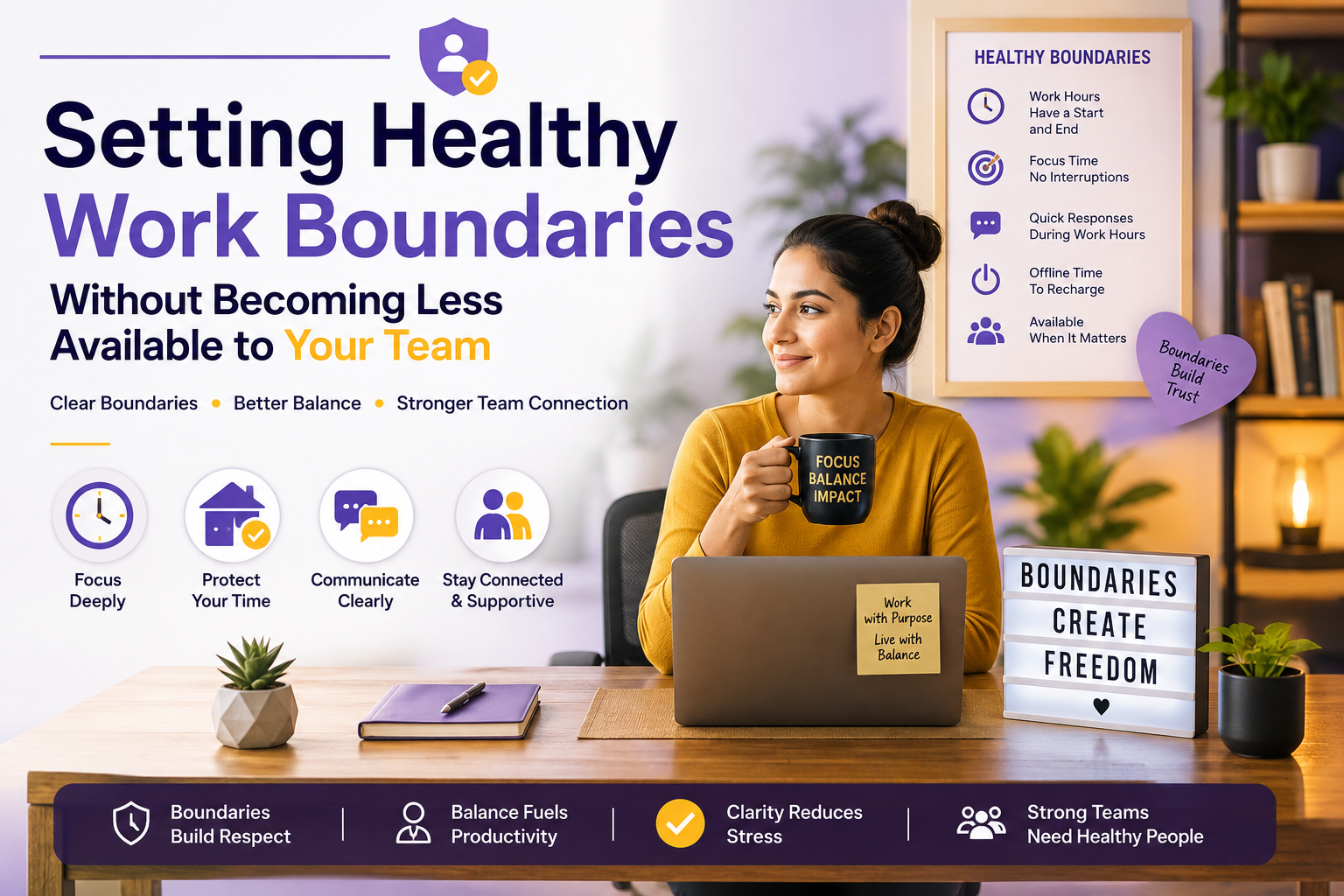
Setting Healthy Work Boundaries Without Becoming Less Available to Your Team
Healthy work boundaries help remote employees stay productive, avoid burnout, and remain reliable teammates. The key is communicating expectations clearly while continuing to support collaboration and responsiveness.
Introduction
Setting healthy work boundaries without becoming less available to your team is one of the biggest challenges in today’s flexible workplaces. Many professionals worry that protecting their personal time may make them appear less committed, while constantly staying online can quickly lead to exhaustion.
The goal is not to work fewer hours than expected but to create clear expectations about your availability. When teammates know when and how to reach you, collaboration becomes smoother and everyone benefits from a healthier work environment.
Why Healthy Work Boundaries Matter
Without clear boundaries, work can easily extend into evenings, weekends, and family time. Over time, this can reduce concentration, increase stress, and affect overall job satisfaction.
Healthy boundaries help you:
- Protect personal time without reducing teamwork.
- Improve focus during working hours.
- Reduce burnout and mental fatigue.
- Create predictable communication habits.
- Maintain long-term productivity.
Practical Ways to Stay Available While Protecting Your Time
1. Share Your Working Hours
Keep your calendar updated and let teammates know when you’re typically online. Consistency reduces confusion and helps others plan meetings more effectively.
2. Respond Within Reasonable Expectations
Being available does not mean replying instantly to every message. Instead, aim for consistent response times that match your team’s workflow.
3. Use Status Messages Wisely
Update your communication tools to show whether you are available, in a meeting, focusing on deep work, or away for lunch. Small updates help teammates understand your availability.
4. Schedule Focus Time
Reserve blocks of uninterrupted work in your calendar. Let colleagues know you’ll respond after the session ends so important work receives your full attention.
5. End the Workday Clearly
At the end of your schedule, close work applications, silence notifications if appropriate, and transition into personal activities. This supports healthier work-life balance without affecting your reliability.
Instead of saying “I’m unavailable,” try saying “I’ll reply after my current task finishes at 3 PM.” Clear communication builds trust while protecting your schedule.
Daily Boundary Checklist
| Habit | Benefit |
|---|---|
| Set clear work hours | Creates predictable availability |
| Update status messages | Improves team communication |
| Schedule focus sessions | Reduces interruptions |
| Plan tomorrow before leaving | Improves next-day productivity |
| Disconnect after work | Supports recovery and balance |
Common Mistakes to Avoid
- Feeling obligated to answer every notification immediately.
- Keeping communication apps open all evening.
- Never telling teammates when you are unavailable.
- Scheduling meetings during every free hour.
- Ignoring breaks to appear more productive.
Build Trust Through Consistency
Strong work boundaries are supported by reliability. Delivering quality work on time, communicating clearly, and following through on commitments matter more than appearing constantly online.
As your teammates become familiar with your schedule, they learn when to expect responses and how to collaborate effectively. This creates a healthier team culture where everyone can focus on meaningful work instead of constant interruptions.
Helpful Resource: Mind Tools – Time Management Resources
Frequently Asked Questions
Can I set boundaries without hurting teamwork?
Yes. Clear communication and dependable follow-through allow you to protect your time while remaining a supportive teammate.
Should I answer messages after work?
Unless your role specifically requires after-hours availability, responding during your normal working hours is usually healthier and more sustainable.
How do I explain my boundaries professionally?
Be transparent about your schedule, expected response times, and preferred communication methods. Most teams appreciate clarity.
What if my workload becomes overwhelming?
Discuss priorities with your manager early. Adjusting deadlines or redistributing work is often more effective than consistently working longer hours.
Conclusion
Setting healthy work boundaries without becoming less available to your team is about creating structure rather than limiting collaboration. By communicating your schedule, managing notifications thoughtfully, and consistently delivering quality work, you can remain dependable while protecting your personal well-being.
Healthy boundaries support stronger teamwork, better focus, and a more sustainable work routine that benefits both you and your colleagues over the long term.