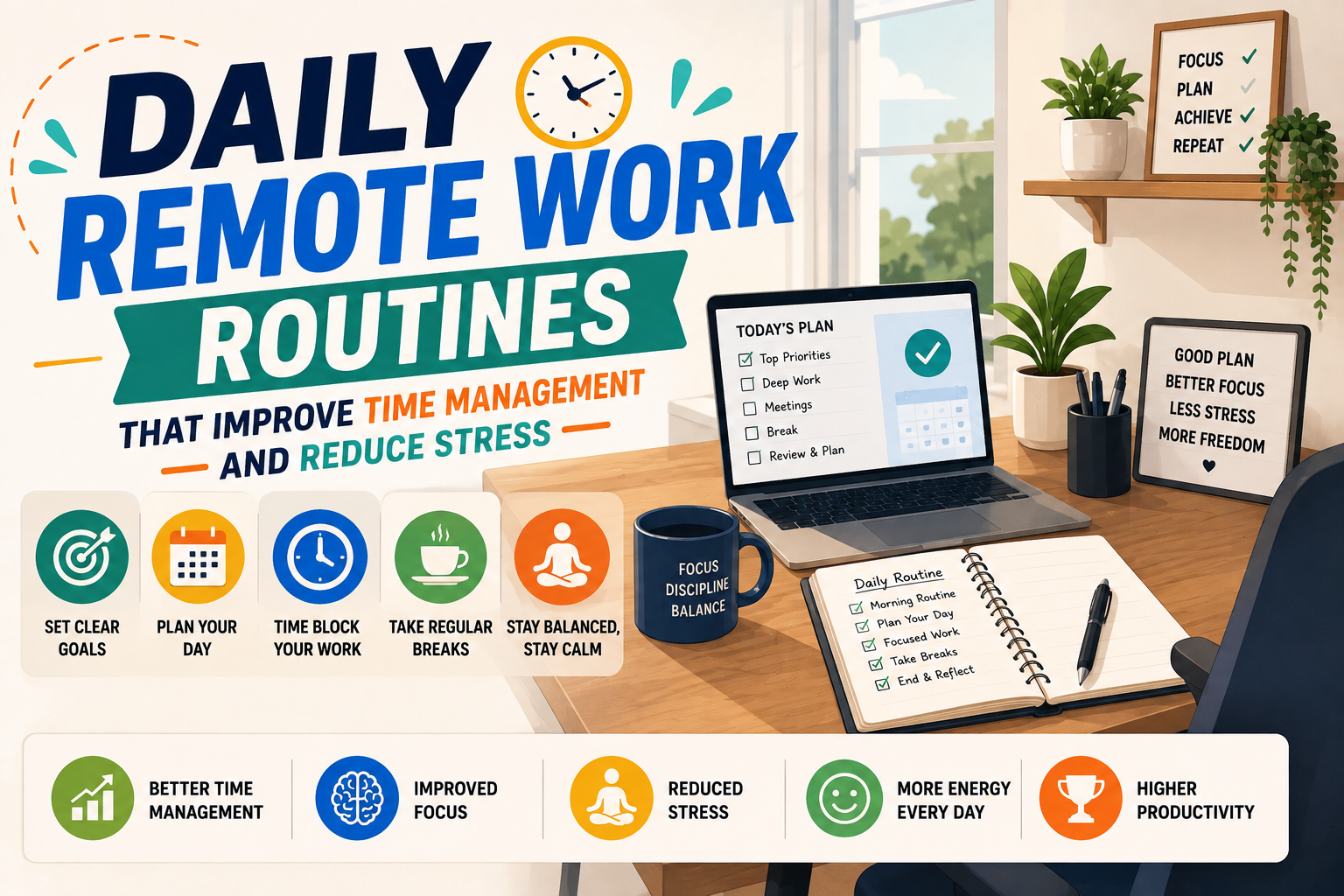
Build Daily Remote Work Systems for Better Time Control
A structured remote work routine can help you manage tasks efficiently, reduce daily stress, and maintain a healthier working rhythm. Simple habits create better focus and make working from home more sustainable.
Working remotely provides freedom and flexibility, but without a proper routine, managing time can become challenging. Many remote workers struggle with unclear priorities, constant interruptions, and difficulty separating work from personal life. Creating simple daily routines helps bring structure to your day, improves productivity, and reduces the stress caused by unfinished tasks or poor planning.
Why Daily Remote Work Routines Are Important
A routine creates a predictable structure that helps your brain understand when it is time to focus and when it is time to rest. Without a schedule, work can easily spread throughout the entire day, making relaxation difficult.
Effective routines are not about creating a strict timetable. They are about building helpful habits that support concentration, organization, and better use of time.
Start Your Day With Clear Priorities
A productive remote workday begins with understanding what matters most. Instead of reacting to every message or request, decide which tasks deserve your attention first.
Create a Task List
Write down important responsibilities to create a clear direction for your day.
Choose Top Priorities
Focus on the tasks that create the biggest impact.
Estimate Your Time
Knowing how long tasks may take helps prevent unrealistic planning.
Avoid Constant Switching
Completing similar tasks together improves efficiency.
Daily Habits That Improve Remote Work Management
| Routine | How It Helps |
|---|---|
| Morning Planning | Creates direction and reduces confusion. |
| Focused Work Blocks | Improves concentration by reducing distractions. |
| Scheduled Breaks | Maintains energy and prevents mental exhaustion. |
| End-of-Day Review | Helps organize unfinished tasks for tomorrow. |
| Workspace Reset | Creates a fresh environment for the next workday. |
Steps to Create a Stress-Free Remote Routine
Manage Time Without Feeling Overwhelmed
Poor time management often happens when every task feels equally urgent. A better approach is to separate important responsibilities from tasks that can wait.
Use realistic deadlines, avoid overloading your schedule, and leave some flexibility for unexpected situations. A balanced plan reduces pressure and helps you maintain steady progress.
Reduce Stress During Remote Work
Take Regular Breaks
Short pauses allow your mind to recover and maintain focus.
Control Notifications
Reducing unnecessary alerts protects your concentration.
Create Work Boundaries
Clear working hours prevent work from taking over personal time.
Maintain Healthy Habits
Sleep, movement, and relaxation support better performance.
Remote Work Routine Checklist
- Plan important tasks before starting work.
- Create a distraction-free workspace.
- Use focused working periods.
- Take regular breaks throughout the day.
- Review progress before ending work.
- Maintain separation between work and personal time.
Frequently Asked Questions
Create daily priorities, organize tasks, reduce distractions, and follow a consistent routine.
Stress often increases when work boundaries are unclear and tasks are not properly organized.
A flexible structure is usually better because it provides organization while allowing adjustments when needed.