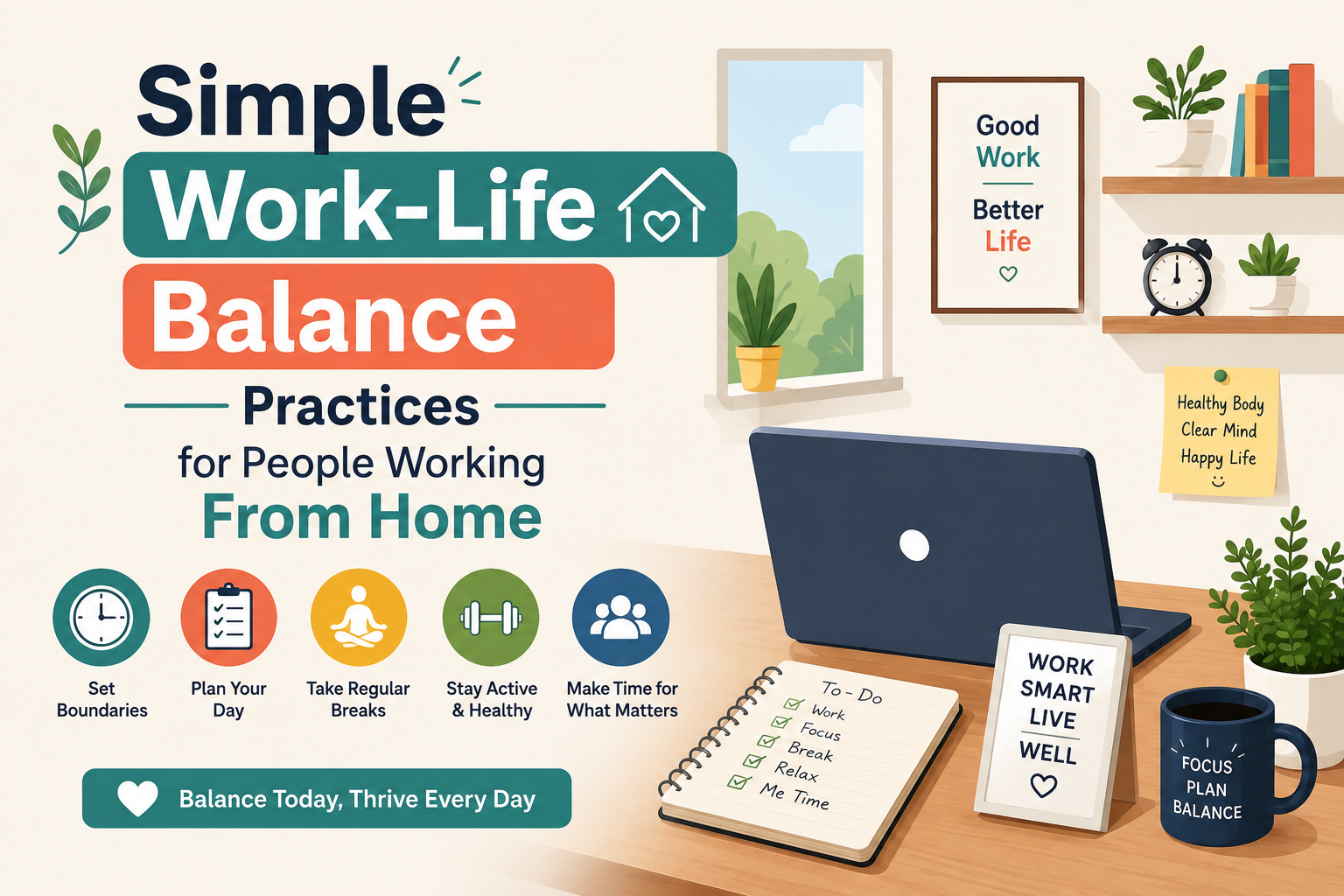
Create a Healthier Routine While Working From Home
Maintaining work-life balance while working remotely requires intentional habits. Simple daily practices can help you stay productive, protect your personal time, and create a healthier relationship with work.
Working from home provides flexibility, but it can also blur the line between professional responsibilities and personal life. Without clear boundaries, work can easily extend beyond normal hours, making it difficult to relax and recharge. Creating simple work-life balance practices helps remote workers stay focused during working hours while making enough space for family, hobbies, rest, and personal well-being.
Why Work-Life Balance Matters in Remote Work
When your home becomes your workplace, the separation between work and personal activities becomes less obvious. This can lead to longer working hours, constant availability, and increased stress.
A balanced routine allows you to complete important tasks while protecting your energy. It improves focus, motivation, and overall satisfaction with remote work.
Create Clear Boundaries Between Work and Personal Time
One of the most important habits for remote workers is creating a clear separation between professional and personal responsibilities.
Follow Fixed Work Hours
Set a regular schedule so your workday has a clear beginning and ending.
Create a Workspace
A dedicated area helps your mind switch into work mode.
Disconnect After Work
Avoid checking work messages constantly after finishing your tasks.
Communicate Availability
Let others know when you are working and when you are unavailable.
Simple Habits That Improve Balance
| Practice | How It Helps |
|---|---|
| Daily Planning | Creates structure and prevents feeling overwhelmed. |
| Taking Breaks | Restores energy and improves concentration. |
| Setting Priorities | Helps focus on important tasks first. |
| Maintaining Routines | Creates stability during remote work days. |
| Making Time for Yourself | Supports relaxation and personal growth. |
Steps to Build a Better Remote Work-Life Routine
Manage Distractions While Working From Home
Home environments often include many distractions, including household responsibilities, notifications, and unexpected interruptions. Creating a focused routine helps reduce these challenges.
Try preparing your workspace before starting, organizing your tasks in advance, and using specific periods for focused work. This allows you to complete responsibilities efficiently without extending your workday unnecessarily.
Healthy Practices Outside Working Hours
Stay Active
Movement helps refresh your body and mind after long periods of sitting.
Spend Quality Time
Personal relationships and hobbies help create emotional balance.
Practice Relaxation
Quiet activities can reduce stress and improve recovery.
Maintain Sleep Habits
A consistent sleep routine supports energy and productivity.
Work-Life Balance Checklist
- Create clear working hours.
- Separate your workspace from relaxation areas.
- Take regular breaks during the day.
- Avoid unnecessary work after hours.
- Make time for personal interests.
- Maintain healthy daily routines.
Frequently Asked Questions
Create clear schedules, use a dedicated workspace, and develop routines that signal when work begins and ends.
The main challenge is that home and workplace boundaries become mixed, making it easier to work longer than planned.
Yes. Rest, clear boundaries, and healthy routines often improve focus and long-term performance.