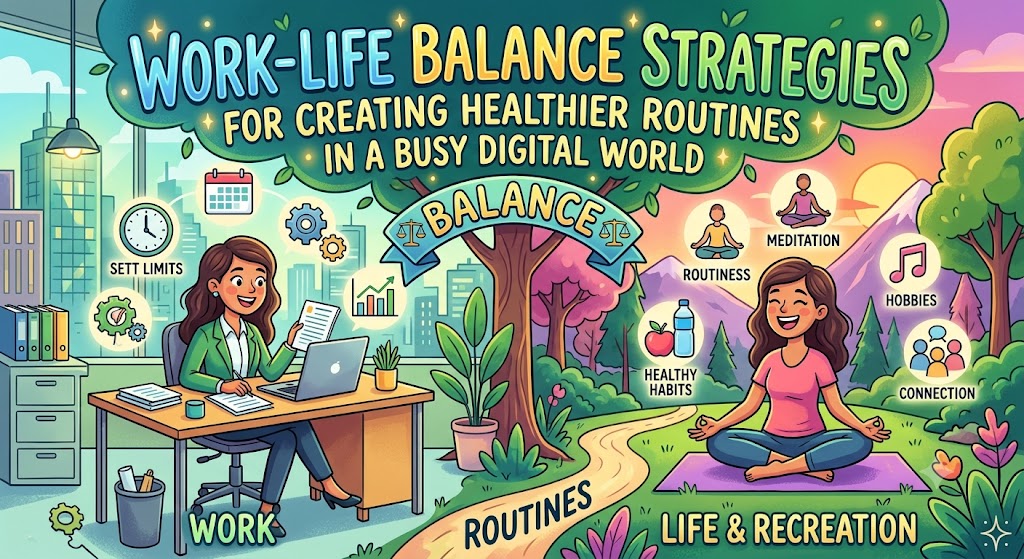
Modern life offers an incredible amount of convenience, but that convenience can also make it difficult to switch off. A laptop can bring work into the living room, a smartphone can deliver messages at dinner, and a simple notification can pull attention away from a conversation, a meal, or a few quiet minutes. When everything is available all the time, it becomes easy to feel as though something always needs to be answered.
Work-life balance does not mean dividing every day into perfectly equal amounts of professional and personal time. Real life rarely works that neatly. Some weeks require extra attention at work, while other periods may require more time for family, personal responsibilities, learning, rest, or hobbies. A healthier approach is to create routines that allow these different areas of life to receive appropriate attention without constantly competing with one another.
The most effective strategies are usually simple. Clear priorities, sensible digital boundaries, regular breaks, realistic schedules, and intentional downtime can make a significant difference. The goal is not to create another complicated productivity system, but to develop a rhythm that can realistically survive busy days.
Create clear signals for when work begins and ends.
Reserve space for rest, relationships, and personal interests.
Use technology intentionally instead of reacting to every alert.
Give your mind regular opportunities to slow down and reset.
Start by Defining What Balance Means to You
One reason work-life balance can feel difficult is that people often measure it against someone else’s routine. One person may value evenings with family, another may prioritize exercise, while someone else may need quiet time for reading, creative work, or simply recovering from a demanding day.
Instead of asking whether your schedule looks balanced from the outside, ask whether your current routine supports the things you genuinely value. This small change in perspective can make planning much more practical. Once your priorities are clear, it becomes easier to decide which commitments deserve time and which ones can be reduced, postponed, delegated, or declined.
Create a Reliable Start and Finish to the Workday
Boundaries are particularly important when work and personal life happen in the same physical environment. Without a clear beginning and ending, professional tasks can gradually expand into every available hour.
A simple start-of-day routine might include reviewing priorities, checking the schedule, preparing your workspace, and identifying the most important task. An end-of-day routine can include reviewing completed work, writing down unfinished items, organizing tomorrow’s priorities, and closing work applications.
Build a Routine Around Energy, Not Just the Clock
Time management is useful, but energy management is equally important. Not every hour of the day produces the same level of concentration. Some people naturally perform demanding tasks earlier, while others become more productive later. Instead of treating every hour as identical, pay attention to when your focus is strongest.
Use high-energy periods for work that requires concentration, planning, writing, analysis, or creative thinking. Reserve lower-energy periods for routine administration, organizing files, answering straightforward messages, or other tasks that do not require as much mental effort.
Stop Letting Every Notification Become a Priority
Digital tools are valuable because they make communication fast. The problem begins when speed becomes an expectation for every interaction. Constant notifications encourage people to switch attention repeatedly, even when the incoming message is not urgent.
Consider turning off non-essential alerts and creating specific periods for checking email, messages, and other applications. Keep genuinely important notifications available while reducing the background noise created by everything else. Technology should support your priorities rather than decide them for you.
Make Room for Real Breaks
A break is not always a break if your attention remains connected to work. Checking email while eating lunch or answering messages during a walk may provide physical distance from the desk without giving your mind a genuine opportunity to reset.
Whenever possible, step away from the screen completely. Have a meal without multitasking, walk outside, stretch, talk with someone, listen to music, or simply sit somewhere quiet. Short periods of genuine disconnection can help make the return to work more focused.
Breaks also work best when they are planned rather than treated as something you earn only after finishing everything. There will almost always be another task waiting.
Protect the Parts of Life That Cannot Be Rescheduled Forever
Work often comes with measurable deadlines, while personal time can seem more flexible. That flexibility can become a problem when personal priorities are repeatedly pushed aside. Family conversations, exercise, hobbies, meals, social connections, and quiet time may not have a formal deadline, but they still contribute to a healthy routine.
Treat important personal activities with the same respect you give to professional commitments. Put them on the calendar when necessary. This does not mean every minute of personal life must be scheduled. It simply makes it less likely that personal priorities will always lose to the next work request.
Not every opportunity, meeting, request, or invitation needs to fit into your schedule. A respectful “not right now” can protect more important commitments.
Schedules packed from morning to evening leave no room for unexpected tasks. Small gaps provide flexibility when the day does not go according to plan.
Switching repeatedly between work, messages, entertainment, and personal tasks can make everything take longer. Give important activities your full attention when possible.
Create a Simple Weekly Reset
Daily routines become easier when you occasionally step back and review the bigger picture. Once a week, spend a few minutes looking at upcoming responsibilities, appointments, deadlines, personal plans, and commitments.
Identify the days that are likely to be especially busy and decide where you can create breathing room. You might move a non-essential task, prepare something in advance, or protect an evening from additional commitments. This small planning habit can prevent the entire week from becoming a series of last-minute decisions.
“`- What deserves my attention this week?
- Where am I likely to become overloaded?
- Which personal priorities need protected time?
- What can be postponed, simplified, or removed?
Keep the Routine Flexible Enough for Real Life
A routine should provide structure without becoming another source of pressure. Unexpected meetings happen. Family needs change. Projects become urgent. Some days simply do not go according to plan.
Instead of abandoning your routine when something changes, return to its most important principles. Protect the essentials, adjust the less important tasks, and restart the normal rhythm when the disruption passes. A flexible system is much more sustainable than a perfect schedule that collapses after one difficult day.
A Practical Daily Balance Framework
“`Review priorities, organize your environment, and decide what genuinely needs your best attention.
Concentrate on important work while reducing unnecessary notifications and interruptions.
Give yourself genuine pauses instead of filling every break with another screen.
Shift attention toward relationships, hobbies, meals, movement, relaxation, and personal interests.
Give your mind a clear opportunity to move away from work and digital demands.
Balance Is a Rhythm, Not a Perfect Formula
A healthy work-life routine does not require every day to look identical. The real objective is to create enough structure that work has a place, personal life has a place, and neither constantly consumes the other.
Start with the boundaries that would make the biggest difference in your own routine. Perhaps that means ending work at a consistent time, checking messages less frequently, protecting family meals, scheduling regular movement, or simply creating thirty minutes of quiet time without a screen.
The digital world will continue to move quickly, and there will always be another notification, message, deadline, or piece of content competing for attention. You do not need to respond to all of it immediately. By choosing your priorities deliberately, creating realistic boundaries, and protecting time for recovery and relationships, you can build a routine that is productive without becoming exhausting. Good balance is not about escaping a busy life; it is about making sure the busy parts do not take over the whole of it.