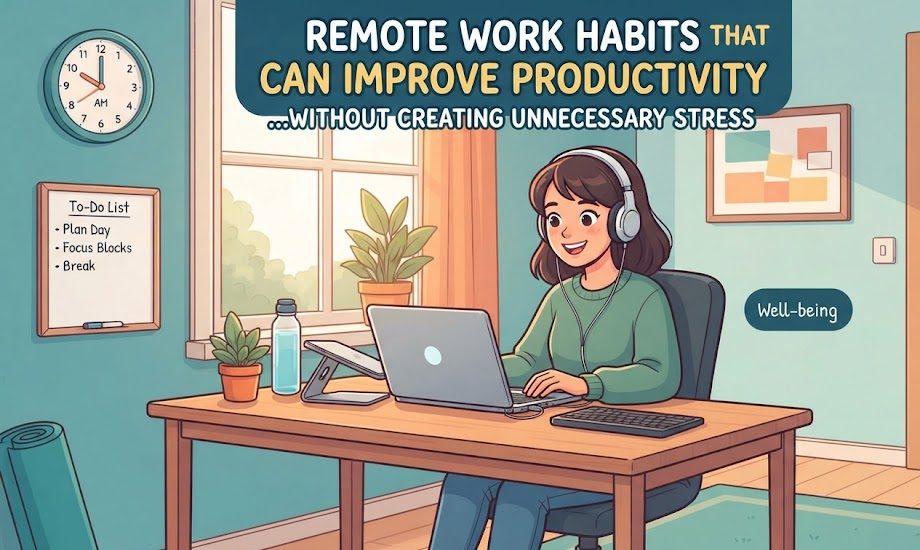
Working remotely can make everyday life more flexible, but flexibility can sometimes create a different kind of pressure. Without a clear boundary between work and personal time, people may check messages late at night, work through every break, or feel that they must always be available. Over time, these habits can make work feel more tiring instead of more convenient.
“`Productivity does not mean staying busy from morning until evening. A productive remote worker is usually someone who can identify important tasks, give them proper attention, communicate clearly, and finish the workday without unnecessary mental clutter. Small improvements in daily habits can make this process much easier.
The following practices focus on building a realistic remote-work routine that supports concentration while leaving enough room for breaks, personal responsibilities, and recovery.
The goal is not to complete every possible task. The goal is to consistently complete the most valuable work while maintaining a sustainable routine.
Begin the Day With a Simple Plan
Starting a remote workday without knowing what deserves attention can lead to constant task switching. Messages, emails, notifications, and small requests can quickly consume the first few hours.
Before getting deeply involved in work, identify a short list of priorities. Choose the tasks that have the greatest impact rather than creating an unrealistic list of everything you might possibly accomplish.
A simple plan also gives you a reference point when unexpected requests arrive. Instead of automatically changing direction, you can decide whether the new request genuinely deserves priority.
Top Priority
Identify the most important result for the day.
Essential Tasks
Choose a few realistic tasks to complete.
Flexible Work
Leave room for unexpected responsibilities.
Create a Consistent Start to the Workday
Remote work removes the natural transition created by commuting. That can be convenient, but it also means your mind may need another signal that the workday has begun.
Create a short routine that you can repeat most working days. It could involve preparing your workspace, reviewing the schedule, making a drink, checking priorities, or taking a brief walk before sitting down.
The routine does not need to be complicated. Its purpose is simply to create a predictable transition from personal time into focused work.
A simple morning sequence
Do One Important Task Before Chasing Small Tasks
Emails and chat messages can create the feeling that you are being productive because they are easy to complete. However, answering several small messages does not necessarily move an important project forward.
When your schedule allows, give an important task your attention before becoming absorbed in routine communication. Even thirty to sixty minutes of focused work can create meaningful progress.
This does not mean ignoring urgent communication. Instead, it means distinguishing between information that genuinely needs immediate attention and information that can wait.
Choose one meaningful task → remove unnecessary distractions → work on it for a defined period → then check routine communication.
Use Focus Blocks Instead of Working Continuously
Many remote workers try to remain productive for several hours without stepping away. In practice, attention naturally changes throughout the day, and continuous screen time can make difficult tasks feel increasingly tiring.
Break your workday into periods of focused work separated by short pauses. The length of each period can depend on the task and your personal schedule.
During a focus block, choose one clear objective. During the break, step away from the screen rather than automatically replacing work with another digital activity.
Work on one meaningful objective.
Step away and reset your attention.
Start the next useful work period.
Stop Treating Every Notification as an Emergency
Notifications are designed to attract attention, but most notifications do not represent genuine emergencies. Constant alerts can encourage frequent task switching and make it difficult to complete work that requires concentration.
Review notification settings and keep alerts for genuinely important communication. Less important updates can often be checked at specific points during the day.
Teams can also establish reasonable response expectations so employees do not feel pressured to answer every message instantly.
Ask before reacting
Keep Breaks as Part of the Schedule
Breaks are sometimes treated as lost productivity, but regularly stepping away can help create a more sustainable work rhythm. A short break can provide an opportunity to stand up, move around, get water, or simply look away from the screen.
The important point is to make breaks intentional. A five-minute pause that becomes an hour of unrelated browsing may not provide the same benefit as a clearly defined break.
Useful break ideas
🚶 Walk around the room or outside.
💧 Get some water.
🌤️ Spend a few minutes away from the screen.
🧹 Do a small non-work activity.
🪑 Change position and reset your workspace.
“`Keep the Workspace Separate From Relaxation When Possible
Working from a sofa, bed, or dining table occasionally may be unavoidable, but a consistent work location can help create a clearer boundary between professional and personal activities.
If you have limited space, even a small dedicated corner can work. Keep work equipment together and clear it away when the day is finished if the same area must serve another purpose.
This physical separation can make it easier to mentally switch out of work mode once your responsibilities are complete.
Avoid Overloading the Daily Task List
An enormous task list can create pressure before the day even begins. When there are twenty items on the list and only a few can realistically be completed, finishing the day may feel unsuccessful despite substantial progress.
Separate tasks into essential, useful, and optional categories. This makes it easier to understand what truly matters.
Important work that should be completed.
Good progress if time allows.
Can be moved to another day.
Learn to Say No to Low-Value Work
Remote workers can sometimes receive requests simply because they appear available online. Accepting every request may create an overloaded schedule and leave little time for important responsibilities.
When appropriate, ask whether the request is necessary, when it is actually needed, and whether another person or process could handle it. Saying no does not have to be rude. It can simply mean explaining your existing priorities and suggesting a realistic alternative.
Being available online does not necessarily mean being available for every task immediately.
Set Reasonable Communication Windows
Constantly checking email and team chat can fragment the workday. Instead of monitoring communication every few minutes, consider creating specific periods for checking routine messages.
The schedule should still allow flexibility for genuine urgent matters. The purpose is to prevent normal communication from taking over every available moment.
Teams can make this easier by communicating expected response times and clearly identifying channels or procedures for urgent issues.
Use Simple Tools to Reduce Mental Clutter
Productivity tools can help organize work, but too many applications can create additional complexity. A simple task list, calendar, notes system, and shared project space may be enough for many remote workers.
Choose tools based on actual needs rather than constantly searching for new productivity systems. The best system is one that you can maintain consistently.
Keep information in predictable places
📅 Calendar: Meetings and important time-based commitments.
✅ Task list: Work that needs completion.
📂 File system: Documents and project materials.
📝 Notes: Useful ideas, references, and reminders.
“`Create a Clear End-of-Day Routine
One of the most valuable remote-work habits is learning when to stop. Without a commute or office closing time, unfinished tasks can remain mentally active long after the workday should have ended.
Spend a few minutes reviewing what was completed, noting unfinished work, and identifying the first priority for the following day. Then close work applications and physically leave the workspace when possible.
This simple process can reduce the temptation to keep thinking about unfinished tasks throughout the evening.
Five-minute shutdown routine
Do Not Measure Productivity Only by Hours
Working longer does not always mean accomplishing more. A person may spend ten hours at a computer while only a portion of that time is dedicated to meaningful progress.
Instead of focusing entirely on hours online, consider outcomes. Did an important project move forward? Were useful decisions made? Were key responsibilities completed? Was communication handled effectively?
Measuring meaningful results can encourage a healthier approach to productivity than simply trying to extend the workday.
Make Room for Personal Responsibilities
One advantage of remote work is that some personal responsibilities can be managed more flexibly. However, mixing personal tasks into every work period can also create distractions.
Where possible, decide in advance when small household responsibilities will be handled. A short planned break can be much easier to manage than repeatedly stopping work whenever something catches your attention.
Flexibility works best when it is supported by some structure. The objective is not to create a rigid schedule but to prevent work and personal responsibilities from constantly competing for attention.
Keep Learning Which Habits Actually Help You
Productivity advice is not universal. A technique that works extremely well for one person may feel unnecessary or distracting to another.
Pay attention to your own working patterns. Notice when you concentrate best, which distractions repeatedly interrupt you, which meetings are genuinely useful, and what makes the end of the day difficult.
Then make one small adjustment at a time. Gradual improvement is usually easier to maintain than completely redesigning your routine overnight.
A weekly self-review
Build a Sustainable Remote Work Pattern
A sustainable routine should allow you to perform well without requiring constant pressure. That means balancing focused work with communication, breaks, personal responsibilities, and a clear stopping point.
Rather than attempting to optimize every minute, focus on removing the habits that create the most unnecessary friction. For one person, that might mean reducing notifications. For another, it could mean improving task planning or setting a clearer end to the workday.
The balanced remote-work formula
Know what matters.
Give important work attention.
Take intentional breaks.
Stay connected without constant checking.
Close the workday clearly.
Productivity Works Better When It Is Sustainable
Remote work does not have to mean working continuously. In fact, one of the strongest ways to improve productivity is to remove the habits that make work unnecessarily demanding. A clear plan, focused work periods, sensible communication, regular breaks, and a defined end to the workday can create a much more manageable routine.
The most effective habits are often surprisingly simple. Knowing your priorities prevents busywork from taking over the day. Reducing unnecessary notifications protects concentration. Keeping tasks organized reduces mental clutter, while a consistent shutdown routine creates a boundary between professional responsibilities and personal time.
It is also important to remember that flexibility is one of the main advantages of remote work. A productive routine should leave room for real life rather than attempting to control every minute. Different people will need different schedules, tools, and working environments.
Start with one or two changes instead of trying to rebuild your entire routine at once. Observe what improves your workflow, keep the habits that genuinely help, and adjust the rest. Over time, these small improvements can create a remote-work system that supports both productivity and a healthier sense of balance.
The goal is simple: do meaningful work, communicate effectively, take care of your time, and finish the day knowing that work does not have to occupy every part of it.
“`