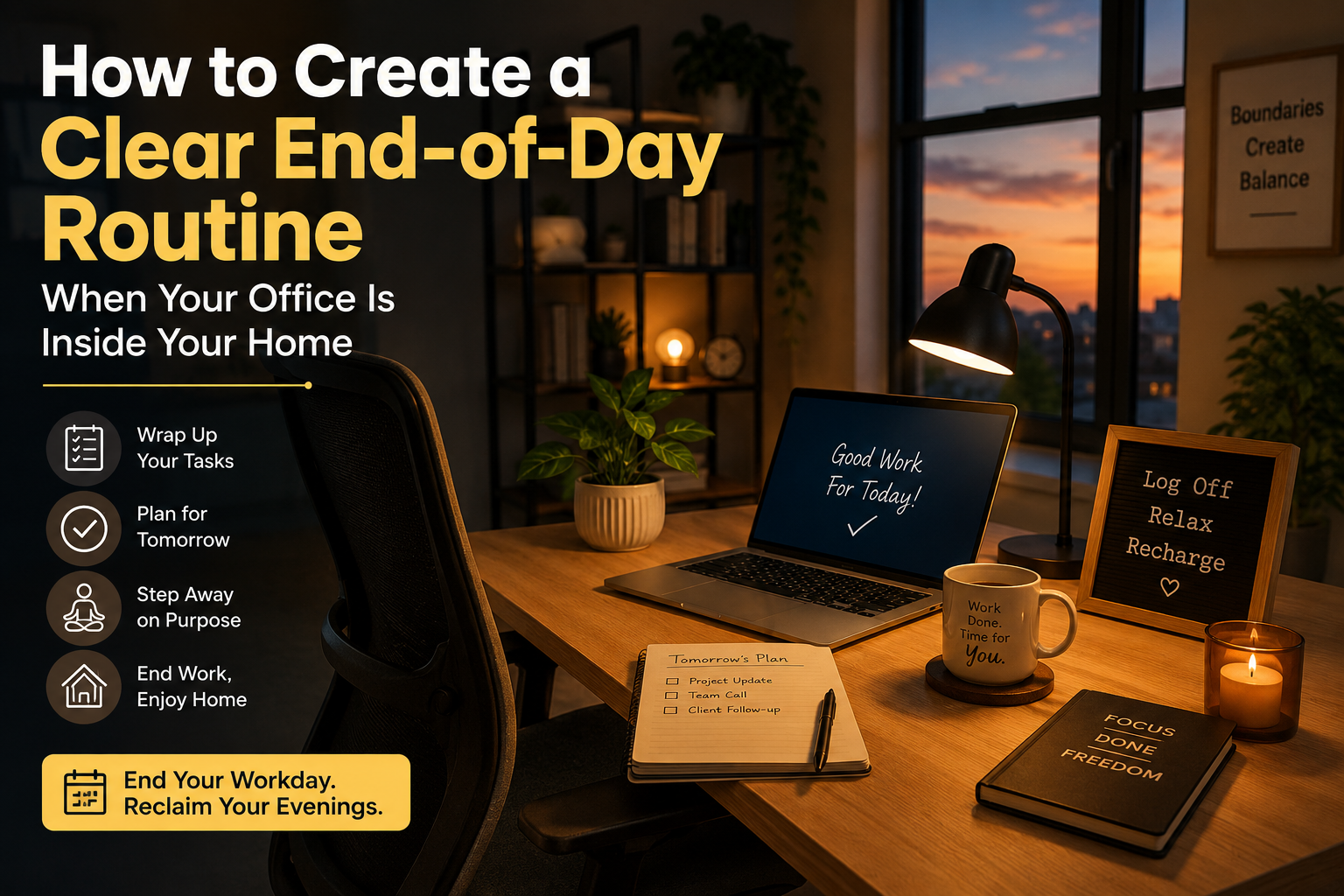
How to Create a Clear End-of-Day Routine When Your Office Is Inside Your Home
Working from home offers flexibility, but it also makes it difficult to separate work from personal life. A thoughtful end-of-day routine helps you finish work with confidence, reduce stress, and enjoy your evenings without constantly thinking about unfinished tasks.
Introduction
Learning how to create a clear end-of-day routine when your office is inside your home can improve both productivity and personal well-being. Without a commute or physical office exit, many remote workers continue checking emails, answering messages, or thinking about work long after their official schedule ends.
A simple daily shutdown routine creates a mental boundary between work hours and personal time. Instead of feeling like you are always available, you finish each day with purpose, knowing exactly where your work stands and what comes next.
Why an End-of-Day Routine Matters
Remote work often removes natural signals that tell your brain the workday is over. This can lead to longer working hours, reduced focus, and difficulty relaxing.
Creating consistent habits at the end of each day helps you:
- Finish unfinished tasks without feeling rushed.
- Reduce mental clutter before leaving your workspace.
- Improve work-life balance.
- Prepare for a smoother start the following morning.
- Lower stress caused by constantly thinking about work.
Build a Practical End-of-Day Routine Step by Step
1. Review Today’s Progress
Spend five minutes reviewing what you completed. Recognizing progress helps create a sense of accomplishment even when some tasks remain unfinished.
2. Update Your Task List
Move unfinished work into tomorrow’s schedule instead of trying to remember everything later. A written plan reduces unnecessary mental effort during your evening.
3. Organize Your Workspace
Put away notebooks, close browser tabs, recycle unnecessary papers, and leave your desk clean. Returning to an organized workspace makes the next morning feel much easier.
4. Close Work Applications
Log out of work platforms, silence notifications when appropriate, and close communication apps. This creates a clear digital boundary between work and personal life.
5. Create a Personal Transition
Take a short walk, prepare dinner, stretch, change clothes, or enjoy a relaxing hobby. Replacing work habits with personal routines helps your brain shift into home mode naturally.
Choose one consistent activity that always signals the end of your workday. Even a five-minute routine repeated daily can strengthen the habit and make switching into personal time feel easier.
Simple Daily Shutdown Schedule
| Activity | Suggested Time |
|---|---|
| Review completed work | 5 minutes |
| Plan tomorrow’s priorities | 5 minutes |
| Organize desk and files | 5 minutes |
| Close work apps and notifications | 3 minutes |
| Personal transition activity | 10–20 minutes |
Common Mistakes to Avoid
- Working until bedtime without a stopping point.
- Leaving dozens of browser tabs open overnight.
- Checking work messages throughout the evening.
- Skipping tomorrow’s planning session.
- Using the same space for work and relaxation without changing your environment.
Create Habits That Last
Building a routine does not require a complicated system. Start with just a few consistent actions that fit your daily schedule. Over time, these small habits become automatic and reduce the mental effort needed to disconnect from work.
Some people prefer ending the day by writing tomorrow’s top three priorities. Others enjoy tidying their desk, turning off their computer, and taking a short walk outside. The best routine is one you can repeat consistently.
Remember that flexibility is important. Busy days happen, but returning to your routine the next day helps maintain long-term balance without adding pressure.
Helpful Resource: CDC – Work-Life Balance and Recovery
Frequently Asked Questions
How long should an end-of-day routine take?
Most effective routines take between 10 and 20 minutes. The goal is consistency rather than length.
Should I check work messages after hours?
Unless your role requires it, limiting after-hours communication helps maintain healthier boundaries and reduces unnecessary stress.
What if I work flexible hours?
Even with a flexible schedule, choosing a regular shutdown process helps create a clear separation between work and personal time.
Can a shutdown routine improve productivity?
Yes. Ending the day with organization and planning makes it easier to begin work confidently the following morning.
Conclusion
Understanding how to create a clear end-of-day routine when your office is inside your home is about creating healthy boundaries instead of working longer hours. A simple combination of reviewing your progress, planning tomorrow, organizing your workspace, and disconnecting from work notifications can improve both focus and overall well-being.
Small daily habits add up over time. By ending each workday intentionally, you give yourself permission to fully enjoy your personal time while preparing for a more productive tomorrow.