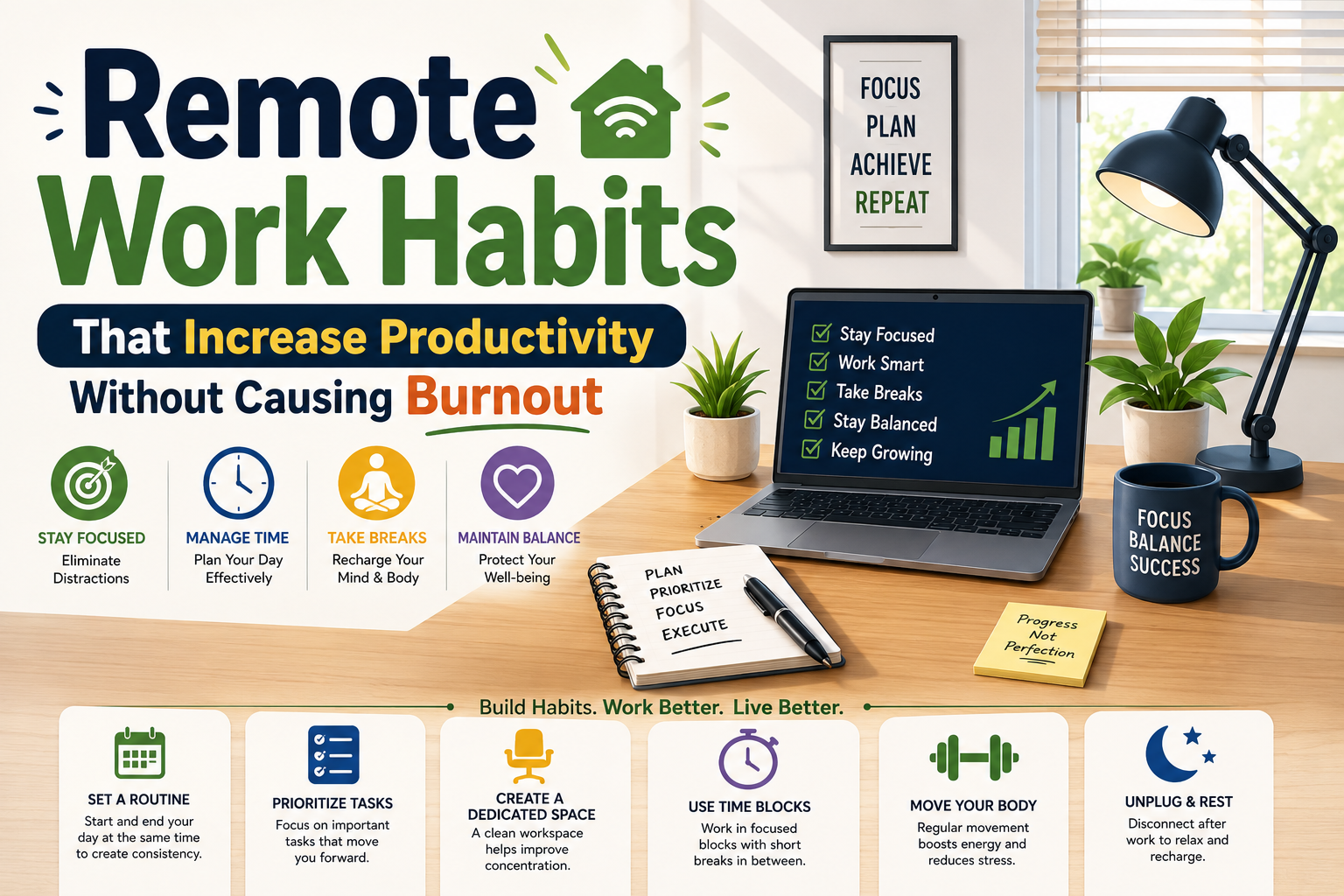
Build Sustainable Remote Work Routines for Better Results
Remote work can offer flexibility and freedom, but maintaining productivity requires healthy habits. The right routines help you stay focused, complete tasks efficiently, and avoid the exhaustion that comes from working without boundaries.
Working from home has changed how many people approach their daily responsibilities. While remote work removes commuting and provides more flexibility, it can also create new challenges such as longer working hours, constant notifications, and difficulty separating professional and personal time. Developing balanced remote work habits allows you to remain productive while protecting your energy and overall well-being.
Why Healthy Remote Work Habits Matter
Productivity is not about working continuously for long hours. It is about using your time effectively while maintaining enough energy to perform consistently.
Without clear routines, remote workers may experience distractions, irregular schedules, and burnout. Healthy habits create structure and help you maintain a better relationship with work.
Create a Clear Start and End to Your Workday
One of the biggest challenges of remote work is the lack of separation between work and personal life. Creating simple boundaries helps your mind transition between professional and personal activities.
Start With a Routine
A consistent morning routine prepares your mind for focused work.
Set Working Hours
Defined work periods prevent tasks from extending throughout the day.
Create Shutdown Rituals
Ending your workday intentionally helps you disconnect and relax.
Separate Work Areas
A dedicated workspace creates a stronger focus signal.
Essential Remote Work Habits
| Habit | Benefit |
|---|---|
| Daily Planning | Helps organize priorities and reduce confusion. |
| Regular Breaks | Maintains energy and prevents mental fatigue. |
| Task Prioritization | Ensures important work receives attention first. |
| Digital Organization | Makes files and information easier to manage. |
| Healthy Boundaries | Protects personal time and reduces burnout risk. |
Steps to Build a Balanced Remote Work Routine
Reduce Digital Distractions
Technology makes remote work possible, but it can also interrupt concentration. Constant messages, notifications, and unnecessary online activity can reduce productivity.
Create specific times for checking emails and messages. During focused work periods, remove unnecessary notifications and keep attention on important tasks.
Prevent Burnout While Working Remotely
Take Real Breaks
Step away from your workspace instead of using breaks for more screen time.
Maintain Social Connection
Regular communication helps reduce feelings of isolation.
Respect Personal Time
Avoid allowing work responsibilities to take over your entire day.
Monitor Your Energy
Adjust your routine when you notice signs of exhaustion.
Remote Work Balance Checklist
- Create a consistent work schedule.
- Set clear boundaries between work and personal time.
- Plan important tasks in advance.
- Take regular breaks during the day.
- Reduce unnecessary digital distractions.
- Make time for rest and recovery.
Frequently Asked Questions
Create routines, set priorities, remove distractions, and maintain clear work boundaries.
Burnout can happen when work hours become unclear, breaks are ignored, or personal time is not protected.
A consistent structure helps productivity, but your routine should remain flexible enough to handle changes.